FileLegal
Charged Again After You Canceled? The Order That Keeps the Dispute Alive
A composite household case showing why complaint escalation has rungs in a fixed order, and which dates decide whether the next rung is still open.
- BySylvia Achterberg
- Cut9/28/26
- Length998 words
- Read4 min
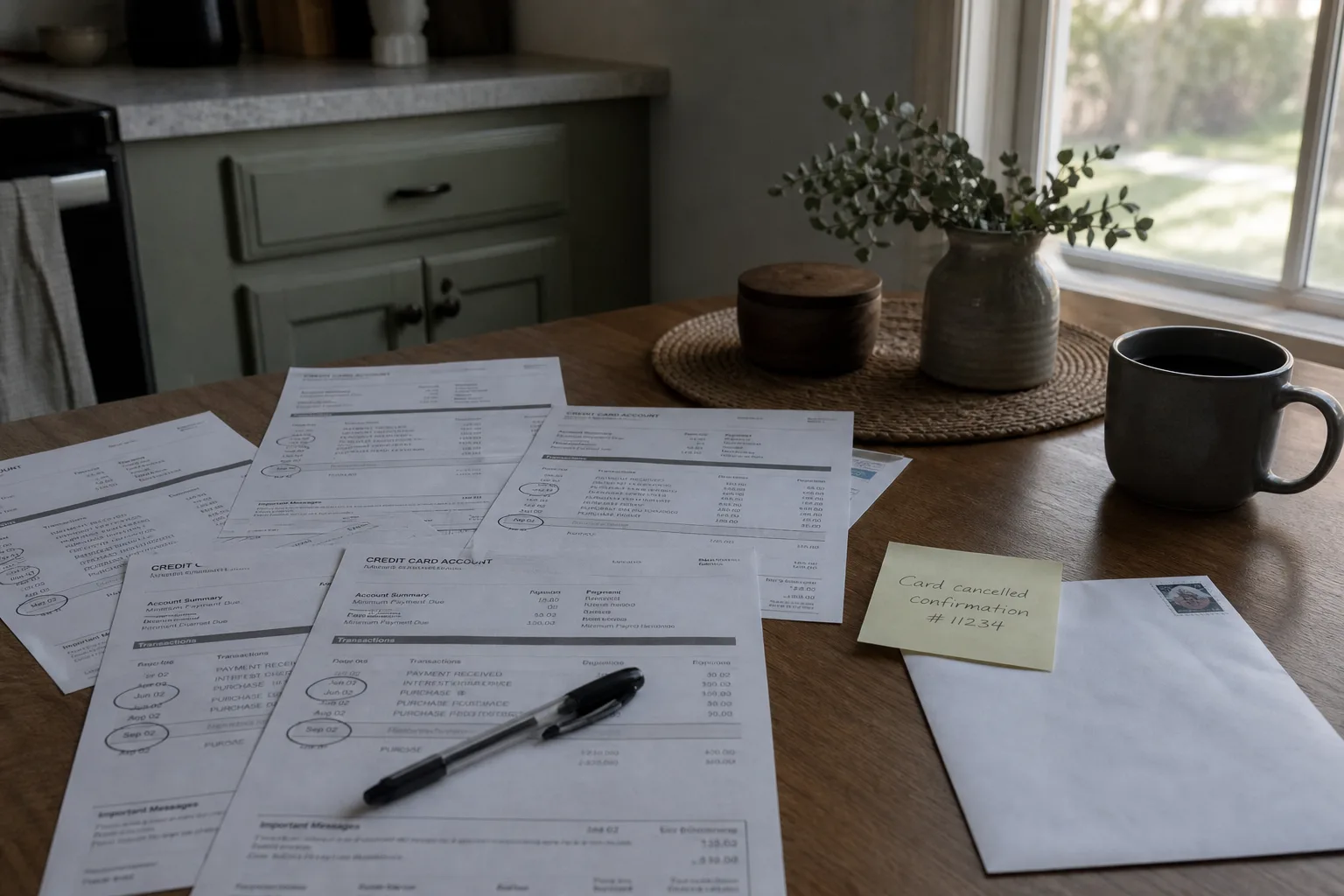
The household in this case did everything in roughly the right spirit and almost nothing in the right order, and the difference cost them four months. The facts are a composite, assembled from the kind of dispute that turns up constantly in consumer complaint files: a monthly service canceled by phone, a confirmation number written on a sticky note, and three further charges on the credit card after the cancellation date. By the time anyone in the house looked closely at a statement, the oldest disputed charge was five months old.
What follows is less about the merchant than about the ladder. Complaint escalation in the United States is not one process. It is several processes, built at different times by different bodies, stacked on top of each other, and each one assumes you have already finished the one below it.
What the household did first, and why it went nowhere
They called the merchant. Twice. Both calls ended with a promise that someone would look into it, and neither produced a written acknowledgment. Then they called the card issuer and asked, in general terms, whether the charges could be reversed. The representative asked whether they had contacted the merchant. They said yes. The call ended with a note on the file and no dispute opened.
Nothing in that sequence created a record that any later reviewer could act on. A phone call to a merchant leaves a note in the merchant's system, visible only to the merchant. A general inquiry to an issuer is not a billing error notice. The household believed they had escalated twice. In the documentary sense they had escalated zero times, because none of the three contacts started a clock that anyone was obliged to answer.
This is the most common failure in complaint handling, and it is not carelessness. It is a reasonable misreading of how the rungs connect.
Why the rungs sit in that order at all
The sequence was assembled piece by piece. The oldest rung is the merchant itself, which predates any of the rules: you complain to the party you dealt with, and most disputes end there because most are errors rather than disagreements.
The second rung, the card issuer, exists because of federal billing error rules written in the 1970s to give cardholders something better than a lawsuit against a merchant in another state. Those rules did something specific. They created a written notice with a defined window, an obligation on the creditor to acknowledge it, and an outer limit on how long the investigation may run. That turned a customer service courtesy into a process with dates attached.
The third rung, a complaint routed through a public regulator, is much newer. The Consumer Financial Protection Bureau is responsible for handling consumer complaints about banks, card issuers, servicers, and similar firms, and routing them to the company for a response. A complaint filed there is typically forwarded to the firm and tracked. It is not a court, and it does not order a refund. What it reliably does is move the file from a call center queue to a team that answers regulator-routed matters, which is a different team with different authority.
The fourth rung is small claims court, which has existed all along and remains the backstop when the first three produce nothing.
Each rung was added because the one below it was not enough. That is why skipping one tends to fail: the higher rung was designed on the assumption that the lower one was tried and documented.
The dates that actually decided this case
Three clocks mattered, and only one of them was visible to the household.
- The billing error window. A written billing error notice to the card issuer generally has to reach the issuer within 60 days after the statement on which the disputed charge first appeared. Not 60 days from when you noticed. Not from when the merchant stopped answering. From the statement.
- The issuer's own response deadlines. Once a proper written notice arrives, the creditor is typically required to acknowledge it within 30 days and to resolve the matter within two billing cycles, subject to an outer limit of 90 days. Those deadlines only start if the notice qualifies.
- The state limitations period for suing the merchant. Measured in years rather than weeks, but it runs in the background the entire time the other steps are happening.
The oldest charge in this case was already outside the 60 day window. The two newer ones were not. That single distinction, which nobody in the household had drawn, split the dispute into a part that could still be worked through the issuer and a part that could only be worked directly against the merchant.
The second attempt, in order
The rework took one evening. They pulled the statements and wrote the charge dates and statement dates in a column. They sent a written billing error notice to the issuer's disputes address, not the payment address, for the two charges still inside the window, attaching the cancellation confirmation number and the dates of the two calls.
They then filed a complaint through the regulator's portal describing the cancellation, the charges, and the notice already sent. That complaint was forwarded to the issuer, and the response came from a different desk than the one that had taken the original phone call.
For the oldest charge, they sent the merchant a short demand letter with a deadline and kept the delivery confirmation, which is the document a small claims filing is built on.
Two of the three charges were credited within the statutory resolution period. The third was refunded by the merchant after the demand letter, before any filing was needed.
The lesson the household drew was narrower than they expected. They had not been ignored. They had been talking to people who had no obligation to answer, and the fix was to start the clocks in the order the clocks were built to run.