FileHousing
Buying a Ranch House With a Crawl Space? What Separates a Real Inspection From a Walk-Around
Inside one narrow case, a 1960s ranch with a crawl space and a later rear addition, the difference between a thorough inspection and a barely adequate one becomes measurable.
- ByDesmond Falk
- Cut10/18/26
- Length875 words
- Read4 min
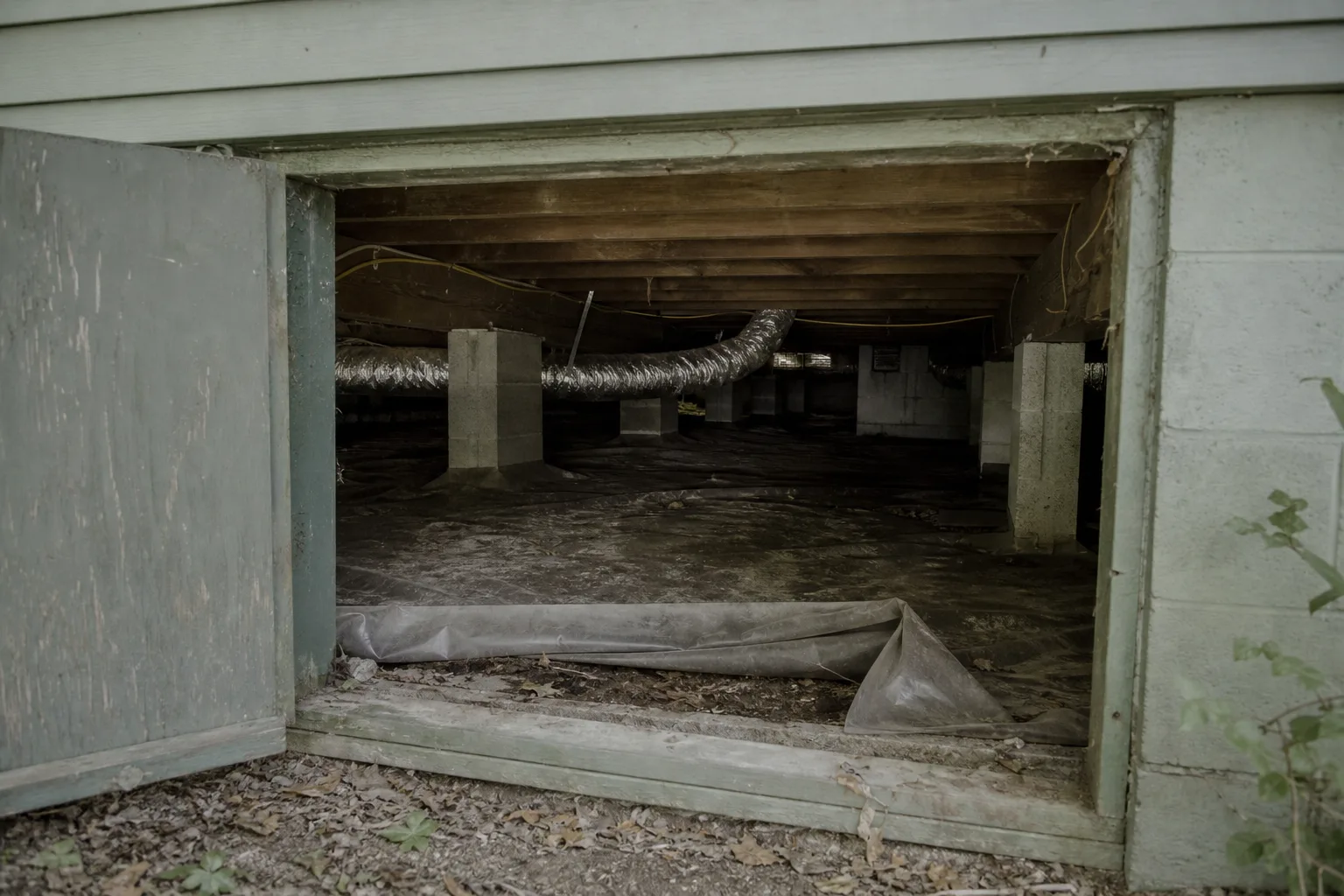
Take one house and hold it still: a single-story ranch built in the early 1960s, roughly 1,400 square feet, sitting on a crawl space, with a family room addition framed onto the back some decades later. It is an ordinary listing in most of the country. It is also the clearest place to see what separates an inspection that earns its fee from one that merely produces a document, because almost everything expensive about that house happens in the three feet between the floor joists and the dirt.
A buyer reading two reports on the same ranch will often find them similar in length and tone. The difference sits in a handful of sentences, and those sentences decide what the house costs to run for the next decade.
The sentence that quietly hollows out a report
Somewhere in the structure section, a weak report will say the crawl space was not entered due to limited access, standing water, insulation debris, or inadequate clearance. That language is permitted under most state inspection standards, and an inspector is entitled to decline an unsafe or genuinely inaccessible space. The problem is what follows. In a thin report, nothing follows. The limitation is recorded and the report moves on to the water heater.
A thorough inspector treats the same limitation as an open item rather than a closed one. The report says why entry was declined, what was visible from the access point, what that partial view suggests, and what specifically should be done before the inspection period ends. If the hatch is blocked by stored lumber, the recommendation is to have it cleared and the space re-inspected, not to assume the worst or the best. The distinction is between an inspector documenting the boundary of their work and one leaving the buyer holding a gap they will not notice until the first winter heating bill arrives.
What a real crawl space visit produces
On this ranch, an inspector who goes in comes out with a specific inventory. Not adjectives. Items, locations, and conditions.
- The ground cover. Whether there is a vapor barrier, what it is made of, whether it is lapped and tucked at the piers, or whether it is three torn sheets laid loose in 1987.
- Moisture evidence. Staining lines on piers, efflorescence, rusted duct straps, fungal growth on the subfloor, and crucially where the moisture pattern is heaviest relative to the exterior grade and downspouts.
- The addition's connection. Whether the rear addition sits on its own piers or footings, how its framing ties into the original band joist, and whether the floor transition between old and new shows differential movement.
- Ductwork and insulation. Flex duct sagging in the dirt, disconnected branch runs, batt insulation fallen out of the joist bays and lying face down on the vapor barrier.
- Plumbing and wiring additions. Supply lines added later, often unsupported, and junctions made by whoever built the addition.
Each of those is a running cost item before it is a repair item. Fallen insulation and ducts in contact with damp ground show up every month on the utility bill. The Department of Energy is the federal body responsible for residential energy use and efficiency programs, and crawl space conditioning sits squarely inside what it covers. A buyer who gets the inventory can price the fix. A buyer who gets "crawl space appears serviceable" cannot.
Observation language versus hedge language
Read any inspection report twice: once for findings and once for grammar. Strong reports state what was seen and where. "Vapor barrier torn and displaced across the southeast quadrant, soil damp to the touch, moisture staining on two piers below the addition." Weak reports use conditional and generalized phrasing. "Typical moisture conditions were noted; monitor and maintain positive drainage."
The second sentence is not false. It is simply not actionable, and it transfers the work of interpretation back to the person least equipped to do it. The useful test is whether a contractor could quote from the paragraph without a site visit. If they could, the inspector did their job.
Scope decisions worth making before you book
The inspection is the general practitioner. On this particular house, two referrals are worth deciding on in advance rather than reactively.
The first is a structural engineer for the addition's foundation, if the report flags any movement at the tie-in. An engineer's letter costs a few hundred dollars and converts a vague worry into a specification. The second is a crawl space or waterproofing contractor who will quote encapsulation, drainage, or duct replacement as separate line items rather than a single bundled number. Getting both during the inspection period means negotiating from documents instead of impressions.
Ask the inspector directly, before booking, whether they enter crawl spaces, what clearance they require, and whether photographs are located rather than captioned generically. Ask how a re-inspection is handled if access is blocked on the day, and what it costs. Those three answers predict the quality of the report more reliably than price does.
The ranch will sell either way. What changes is whether the buyer takes possession already knowing which of the three feet under the floor needs money first, and roughly how much, with a quote in hand and a sequence to follow.