FileHealth
Quoted a Course of Care, Not a Visit? The Paperwork That Pins the Number Down
Comparing clinics on the headline visit fee hides most of the cost. The estimate, the superbill and a few dated windows tell you what a full course of treatment actually runs.
- BySylvia Achterberg
- Cut11/25/26
- Length1,158 words
- Read5 min
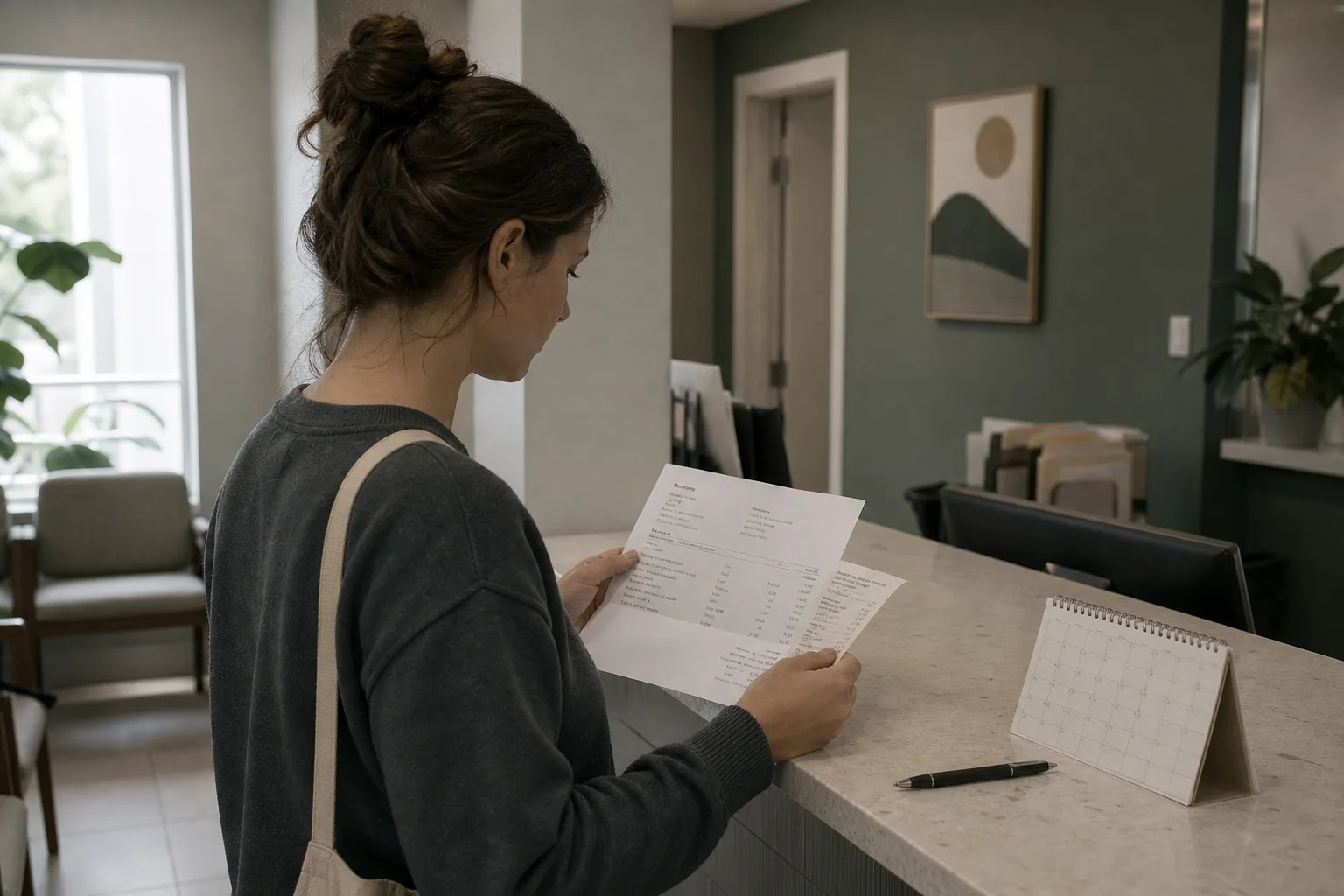
The number a clinic quotes on the phone is almost always the price of one appointment. The number that lands on your card over the following six months is something else: an initial intake, a set of labs, two or three follow-ups, and whatever is dispensed at the front desk on the way out. Those are four separate pricing decisions, made at four different moments, and only one of them is usually disclosed before you book. Comparing clinics on the first number is comparing the smallest piece.
What you are actually buying, visit by visit
A course of care in a naturopathic practice typically has a predictable shape. The first appointment is long, often 60 to 90 minutes, and priced accordingly. It produces a plan rather than a conclusion. Labs are ordered at or shortly after that visit. A follow-up is scheduled to read them. After that, the cadence drops to shorter visits at widening intervals until the plan is either working or being revised.
Ask a prospective clinic to describe that arc in writing before you book: how many visits they would expect in the first three months for someone with your presenting issue, how long each one is, and what the fee is for each length. Practices that see a lot of self-pay patients usually have this on hand, because they are asked for it constantly. If the answer is only "it depends on the patient," that is true but not usable, and you can press for a range.
The second thing to establish is who holds the money in between. Some clinics bill per visit. Some sell a package covering an intake plus a set number of follow-ups, sometimes with labs folded in. A package is not automatically cheaper. It is a different risk allocation: you are prepaying for visits you may not need, in exchange for a known total and usually a discount. Ask what happens to unused visits, whether there is an expiration date on the package, and whether a refund is prorated or forfeited.
The three line items that move the total
Labs are the first and the most variable. The same panel can be billed through your insurance, run through a reference lab at a cash rate the clinic has negotiated, or ordered from a specialty lab that bills you directly and is rarely covered. The spread between those three routes is wide enough to dwarf the difference in visit fees between two clinics. Ask which labs the practice uses by default, whether a cash price is available, and whether you may take the order to a lab of your choosing.
Supplements are the second. Many practices dispense in-house, and the convenience is real, but it is a retail transaction sitting inside a clinical one. Ask whether the recommended products are available elsewhere, what a month of the core protocol costs, and how long you are expected to stay on it. A protocol that runs two hundred dollars a month for nine months is a larger commitment than the visits that prescribed it.
The third is visit length drift. A 30-minute follow-up that routinely runs 45 is billed at the longer tier in some practices and absorbed in others. That is a policy question with a clean answer, and it is worth asking before the first bill arrives rather than after.
The estimate you are entitled to, and the clock attached to it
If you are uninsured or choosing not to use your insurance, federal rules give self-pay patients a written good faith estimate of expected charges for scheduled care. The timing is tied to when you book. Schedule a few business days out and the estimate is due within one business day of scheduling; schedule further ahead and the window is somewhat longer. You can also request one before you schedule anything, which is the version most useful for comparing two clinics side by side.
The estimate matters beyond planning. When the final bill substantially exceeds the estimate, there is a federal patient-provider dispute resolution process, and it has a filing deadline measured in calendar days from the date on the bill. Miss it and the route closes, regardless of the merits. Put the bill date and the deadline in your calendar the day the bill arrives, not the day you decide to argue about it.
Practices vary in how they present this, and the variation is informative. When patients compare arizona naturopathic doctors, the clinics that hand over a line-itemized estimate covering the intake, the anticipated labs and the expected follow-up schedule are generally the ones whose final totals land closest to what was discussed.
Superbills, reimbursement and the dates that govern them
Most naturopathic care outside a network is billed to you directly, and you seek reimbursement afterward using a superbill: an itemized receipt carrying the diagnosis codes, procedure codes, provider identifiers and the date of service. Whether your plan reimburses depends on your plan. Whether it reimburses on time depends on you.
- Ask for the superbill at checkout. Requesting six of them in January, for visits spread across the prior year, is slower and more error-prone than collecting each one on the day.
- Check the claim-filing deadline in your plan documents. It is commonly expressed as a number of days from the date of service, and it runs whether or not you have gotten around to submitting.
- Confirm the codes before you leave. A missing diagnosis code is the single most common reason a submitted superbill comes back unpaid, and it is a two-minute fix at the front desk.
If you are paying from an HSA or FSA, keep the itemized receipt rather than the credit card slip. The IRS is responsible for the rules on which medical expenses qualify and what substantiation is expected, and an itemized receipt showing the service, the date and the provider is the document that does the work. Supplements are treated differently from professional services, so keep those receipts separate from the start.
Comparing two clinics on the same basis
Build a single sheet with the same rows for each practice: intake fee and length, follow-up fee and length, expected number of follow-ups in the first three months, default lab route and whether a cash price exists, estimated supplement cost per month and expected duration, whether a superbill is issued automatically, and the cancellation window with its fee. Fill it in from what each clinic tells you in writing.
Two practices that look two hundred dollars apart on the intake can land a thousand apart over a course of care, in either direction. The sheet shows you which. It also gives you a document to hold the bill against later, which is the real reason to build it.
Clinics that answer these questions quickly tend to answer them the same way on the invoice. That consistency is the thing worth shopping for, and it is visible well before you book.