FileHousing
Fog on the Inside, Fog Between the Panes: What Each One Is Actually Telling You
Where the moisture sits on a window in cold weather narrows the cause to one of three things, and each carries a different bill and a different deadline.
- ByDesmond Falk
- Cut8/11/26
- Length973 words
- Read4 min
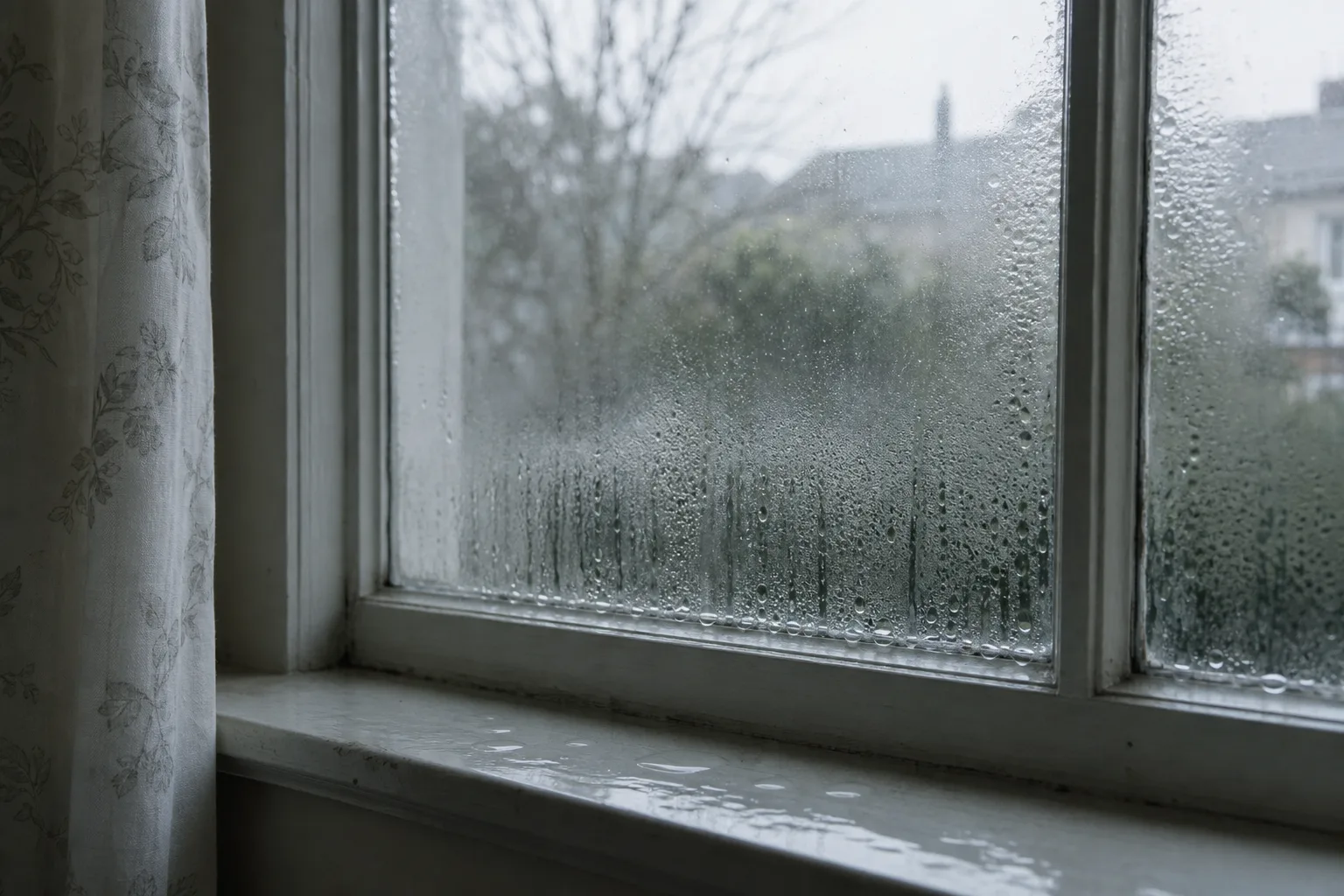
The first cold snap of the year produces a wave of maintenance tickets that almost never say the word condensation. They say the bedroom smells musty. They say the paint is lifting on the sill. They say a casement window will not latch. They say the blinds have gray spots along the bottom rail. All four are the same event, reported at four removes, and the delay between the cause and the complaint is most of what makes the repair expensive.
Anyone managing a single building learns this slowly. Anyone managing forty learns it fast, because the tickets arrive in a pattern and the pattern is legible.
Three places moisture appears, three different problems
Where the water sits narrows the cause considerably, and the distinction is worth getting right before anyone quotes anything.
Inside surface of the glass. Warm indoor air carrying moisture meets a cold pane and gives up that moisture as liquid. This is a humidity and airflow problem before it is a window problem. A single-glazed or older double-glazed unit will run wet earlier in the season and stay wet longer, but the glass is not broken. It is reporting the interior conditions accurately.
Between the panes. This one is different in kind. An insulating glass unit is sealed at the edge with a desiccant inside the spacer. When the seal fails, humid air enters and the desiccant eventually saturates. After that, the cavity fogs, streaks, and in time stains permanently. No amount of ventilation touches it. The unit has to be replaced, and the frame usually does not.
Outside surface. Dew forming on the exterior of the glass on a clear cold morning is generally a sign that the glazing is doing its job, keeping interior heat inside rather than warming the outer pane. It reads as a defect and is often the opposite.
Sorting a ticket into one of those three buckets takes about fifteen seconds on site and saves a great deal of argument later.
The consequences nobody traces back
Interior condensation does not stay on the glass. It runs down and collects at the lowest horizontal surface it can find, which is the glazing bead, then the sill, then the joint between sill and jamb. What happens next depends on what that assembly is made of.
- Painted wood sills. Paint film lifts from below. Once it lifts, water gets behind the coating and the substrate stays wet through the whole cold season. Repainting without addressing the moisture buys one year.
- MDF or particleboard trim. Swells irreversibly at the bottom edge and does not come back. This is a replacement item, not a refinish item.
- Hardware. Hinges, keepers and multipoint locks corrode where water pools. The reported symptom is a window that will not close properly, which then gets diagnosed as a sash out of square.
- Drywall returns. Persistent damp at the corner where the reveal meets the wall is where visible mold typically shows first in a room, because that surface is cold, still and often covered by a curtain.
- Soft goods. Blinds, shades and drapes wick moisture and mark. Replacement of window treatments across a floor of units is not a small line item.
- Energy use. Households running a dehumidifier through the winter to control window sweating are paying for electricity to fight a symptom. The Department of Energy oversees efficiency standards and labeling for residential windows, and the ratings on a replacement unit speak directly to how cold the interior pane gets.
None of those five items arrive labeled as a glazing issue. They arrive as painting, carpentry, hardware, remediation and furnishing.
How a portfolio owner reads the same information
The useful habit borrowed from larger operators is recording location, not just symptom. When a management company logs which unit, which elevation and which floor, a season of tickets turns into a map. Interior fogging concentrated in bathrooms and kitchens on a single stack points at failed exhaust ventilation. Interior fogging spread across north-facing rooms points at glazing performance. Interpane fogging clustered by installation year points at a single production run of sealed units, and that is the case worth checking against a manufacturer warranty before anyone pays for glass.
Sealed unit warranties commonly run a defined number of years from installation and cover the glass but not labor, and they usually require evidence of the failure rather than a general complaint. Photographs dated across a season, with the unit identified, are what turns a warranty claim into a credit.
Scale also changes who does the work. Replacing sealed units across a building, or reglazing a storefront, is a different trade from swapping a residential sash, which is why property managers keep commercial glass contractors on file separately from their general handyman list. The equipment, the insurance and the lead times are not the same.
What the season is good for
Cold weather is the only reliable diagnostic window. A sealed unit with a marginal seal will look perfect in July and fog in January. A room with inadequate exhaust looks fine until outdoor temperatures drop. If you intend to replace glazing or negotiate a warranty claim, the evidence has to be gathered now, not in the spring when the decision gets made.
Practical order of operations for the next few weeks: walk every room on a cold morning before the sun hits the glass, note which of the three patterns you are seeing, photograph the interpane cases with something in frame that identifies the opening, and check the ventilation in every wet room. Then price the work knowing which problem you are buying a solution to.
A window that sweats is not failing quietly. It is producing a legible report on the building's humidity, its ventilation and the age of its glass, and it does so on a schedule you can plan around.