FileHousing
Your Installer Is Gone and the Glass Is Fogging. Where the Warranty Actually Lives
A commercial glazing warranty survived the installer that sold it, but only because of paperwork filed a decade earlier. What changed since, from the owner's side.
- ByRosalind Ntuli
- Cut11/3/26
- Length1,084 words
- Read5 min
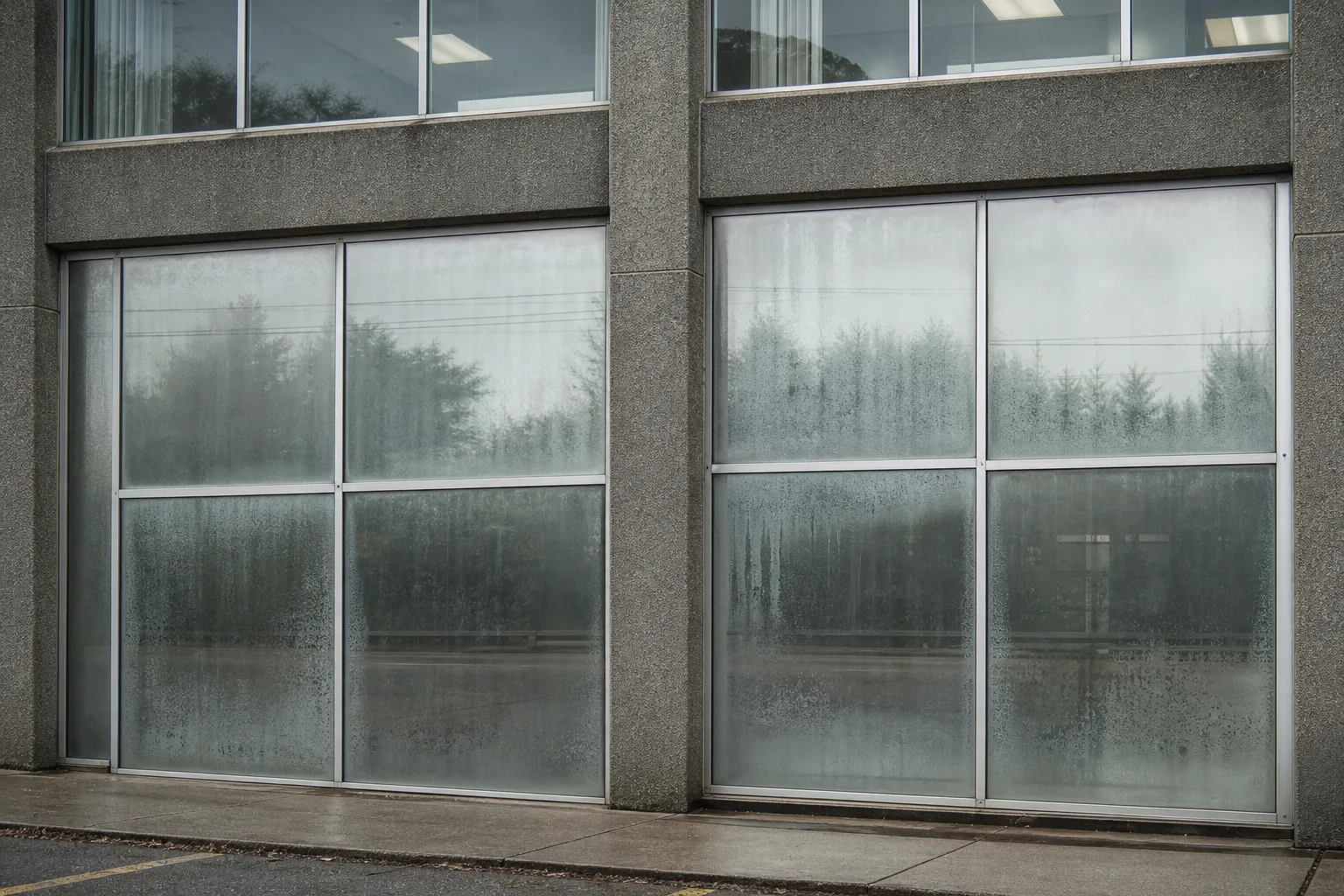
The call came in late winter: four sealed units on the south elevation of a two-story medical office building had gone cloudy, and a fifth had a visible streak of moisture tracking along the bottom edge. The building was nine years past substantial completion. The glazing subcontractor that installed the curtain wall sections and the storefront had dissolved three years earlier, its principals retired, its phone number reassigned. The owner's first assumption was the common one: the warranty died with the company.
It had not. But the reason it survived is worth understanding, because the paperwork that saved this owner roughly $30,000 in replacement cost was created at bid stage, not at the moment of failure. And the same decision, made today, looks materially different from how it looked when this building was glazed.
Two warranties, one invoice, and only one of them survived
What the owner had in the project file was a single-page certificate from the installer promising ten years on "materials and workmanship." That document was worthless the day the entity closed. There was nobody to perform against it.
What the owner also had, filed behind it and never read, was the insulating glass unit manufacturer's warranty registration, submitted by the fabricator at the time of production and keyed to the project address. That one was a separate obligation of a separate company, a glass fabricator still very much in business. It covered seal failure in the sealed unit itself for a defined term, and it covered the glass, not the labor to install it.
That split is the whole lesson. On a commercial glazing job the customer typically holds at least three distinct promises, and they fail independently:
- The product warranty from the glass fabricator or the manufacturer of the aluminum system. Survives the installer's exit, because it was never the installer's promise.
- The installation or labor warranty from the glazing contractor. Does not survive dissolution unless a surviving entity assumed it or a bond backs it.
- The sealant and weatherproofing warranty, sometimes issued jointly by the sealant manufacturer and an approved applicator. Often the longest term on the job and the one most commonly voided by a later, unapproved repair.
In this case the fabricator honored the sealed units. The owner still paid for removal, reglazing, and new gaskets, because no surviving party owed the labor. The net outcome was a partial recovery, which is a better result than most owners expect and a worse one than the certificate in the file implied.
How the same decision looked in 2015
When this building was bid, the owner's representative compared three proposals and selected the middle number from a local firm with good references. The warranty discussion lasted about two minutes. The installer said ten years, the owner wrote it down, and nobody asked which entity was standing behind which part of the assembly.
That was not negligence by the standards of the time. Warranty terms on commercial glazing were frequently summarized verbally and documented thinly. Manufacturer registration was handled inside the supply chain, often without the owner seeing confirmation. Closeout documents arrived as a box of paper or a disc, were put on a shelf, and were opened only when something broke. A buyer who wanted to verify that a sealed unit warranty had actually been filed had to ask the general contractor, who asked the subcontractor, who asked the fabricator, and the answer came back in a week if it came back at all.
The practical consequence is visible in this case. The owner recovered because a fabricator's clerk filed a form correctly in 2014. Not because the owner had confirmed it.
How the same decision looks now
The mechanics have shifted in the owner's favor in three specific ways, and a buyer evaluating proposals today can use all three before signing.
First, registration is verifiable. Most major fabricators and system manufacturers now maintain project-level records an owner can confirm directly, by project address and production date, rather than through the chain of trade contractors. Asking for that confirmation as a condition of final payment is now a reasonable request rather than an unusual one.
Second, warranty documents are more often issued as separate instruments by the party that actually owes the obligation. The Federal Trade Commission oversees how written warranties on consumer products are disclosed, and the general expectation it has shaped, that the promising party and the scope of the promise are stated plainly, has worked its way into commercial practice as well. On a well-documented job today, you can read the fabricator's obligation without reading the installer's.
Third, the market has consolidated enough that continuity is an evaluable criterion. When an owner asks a commercial glass company how long it has operated under its current entity, whether it is an authorized applicator for the sealant system specified, and what happens to its labor warranty if the business is sold, those questions now have ordinary answers rather than defensive ones.
Which option wins, and under what conditions
Put the two defensible choices side by side. A long installer-backed warranty from a smaller regional firm wins when the firm has depth of ownership, a service department that is separate from the installation crews, and a surety relationship you can verify. Those conditions make the promise durable, and the response time on a single fogged unit will beat anything a national account can offer.
A manufacturer-backed warranty placed through an authorized installer wins when the building will likely outlast your ownership of it, when the glazing is a specialty product, or when the asset will be sold or refinanced within the warranty term. The obligation is tied to the glass and the address, not to a relationship, which is precisely what a future buyer's diligence consultant will want to see.
The worst position is the one this owner nearly occupied: a long verbal term from a single entity, no confirmed product registration, and no labor coverage behind it. The fix is cheap at the front end. Ask who owes each piece, get it in writing from that party, confirm the registration before you release retainage, and keep all of it somewhere a later owner will find it.
The glass on that south elevation was replaced over four days the following spring. The fabricator's units arrived at no charge, the labor came out of the operating budget, and the owner's new project file now contains three separate warranty documents instead of one certificate with a number on it.