FileFinance
Insuring a Ring You Inherited? What the Premium Is Made Of, and Why the Appraisal Runs Out
Scheduled coverage and blanket limits solve different problems. What the rate per hundred dollars actually reflects, and why a five-year-old appraisal no longer settles a claim.
- ByRosalind Ntuli
- Cut10/30/26
- Length1,117 words
- Read5 min
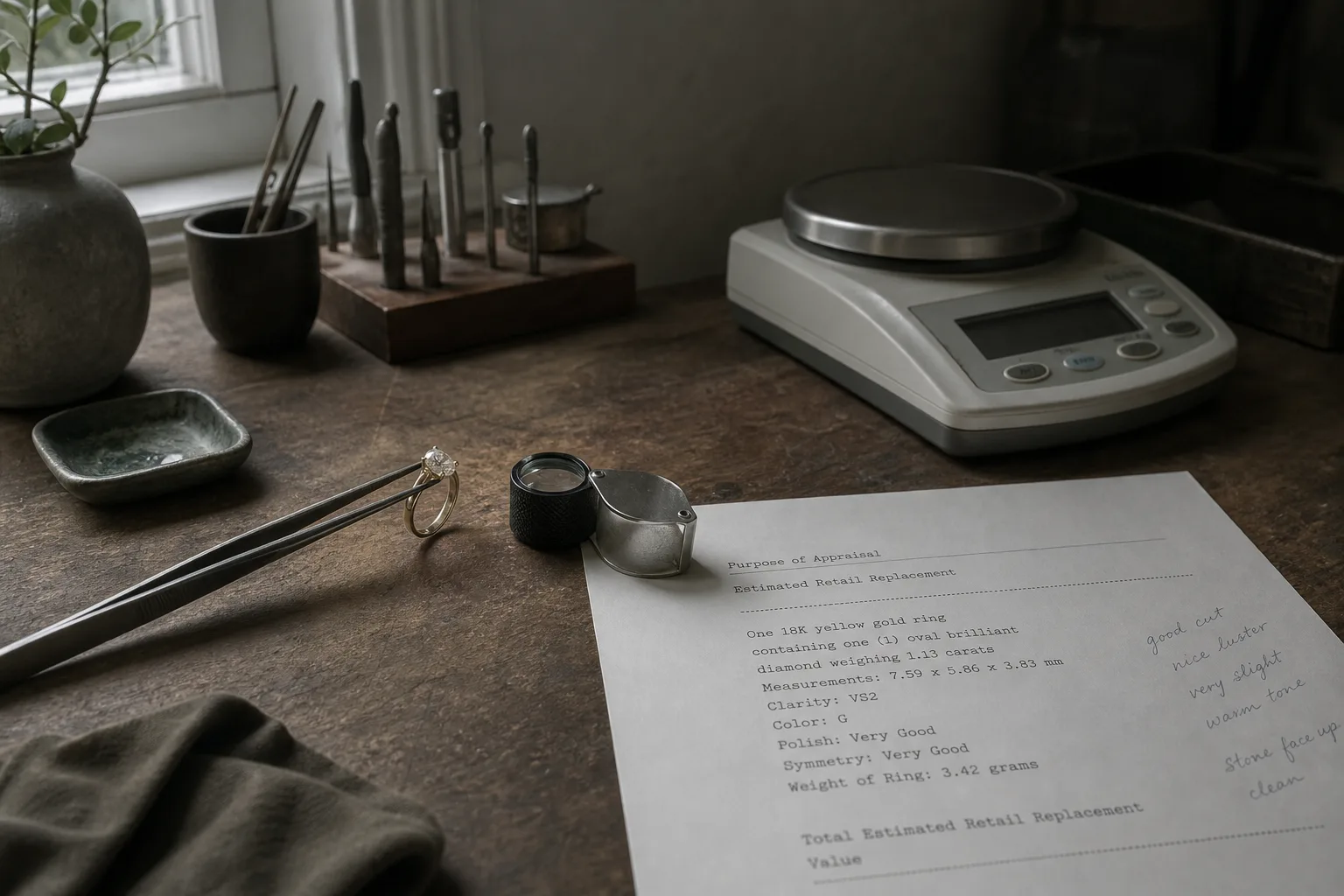
A homeowners policy covers jewelry. It just does not cover much of it. Most standard forms carry a special limit on theft of jewelry, watches and precious stones, and that sublimit is usually a four-figure number that has not moved much in years, while the items it applies to have. A single inherited ring can exceed it. The question is not whether to insure the piece but which of two mechanisms to use, and what each one demands from you on an ongoing basis.
What the premium is actually built from
Scheduled personal property, often called a floater or a rider, is priced as a rate per $100 of insured value. The quoted rate is the whole negotiation. Multiply it by the appraised amount, and that is the annual premium, typically with no deductible applied at claim time.
Four things move the rate more than anything else:
- ZIP code. Theft frequency is rated geographically, and the spread between a low-crime suburb and a dense urban rating territory can be substantial. Two identical rings insured for the same amount in different counties will not cost the same.
- Category. Loose stones, rings worn daily, and watches generally rate higher than a necklace kept in a safe deposit box. Some carriers offer a reduced vault rate on the condition the item stays there, and will decline a claim if it did not.
- Value concentration. A schedule with one $40,000 item and a schedule totaling $40,000 across twelve items are not priced identically. Carriers watch single-item exposure.
- Whether the carrier is a standard company or a specialty insurer. Specialty jewelry insurers and high-value personal lines carriers underwrite this class differently from a carrier whose main business is auto.
What does not move the rate much: your claims history on the auto policy, the age of the piece, or whether it was a gift. Underwriters are pricing the probability that the object leaves your possession, not your biography.
Blanket limit or itemized schedule, and when each one wins
Carriers generally offer two ways to raise jewelry coverage. A blanket increase raises the aggregate limit on the category, often with a per-item cap inside it, and usually requires no appraisal. A schedule names each piece, attaches a dollar figure, and typically requires documentation above a stated threshold.
The blanket approach wins when you own a drawer of moderate pieces, none individually large, and the real risk is a burglary that takes all of them at once. It costs less to administer, it covers items you forgot you had, and it does not create an obligation to keep paperwork current. It loses when one item dominates the collection, because the per-item cap inside the blanket limit will cut the recovery to a fraction of what the piece is worth.
The schedule wins the moment a single item matters more than the rest combined, and for two reasons beyond the limit. Scheduled items are usually covered on an all-risk basis: the stone that falls out of a setting and is never found is a covered loss, where a blanket limit typically responds only to named perils such as theft and fire. And scheduled items usually carry no deductible. The tradeoff is maintenance. A schedule is only as good as the valuations sitting in it.
Why an appraisal has a shelf life
Most carriers ask for an updated appraisal every three to five years on scheduled items, and some are now asking more often. The reason is not bureaucratic. An appraisal states a replacement cost at a particular moment in a particular market, and several things have moved in that market recently.
Gold has repriced significantly upward over the past few years, which means the metal content of a piece appraised in the late 2010s is carrying a cost basis that no longer reflects what a jeweler would pay to rebuild it. Labor and bench rates have risen alongside general wage inflation. On the other side, lab-grown diamonds have gone from a curiosity to a mainstream category, and their arrival has pulled down what a comparable natural stone commands in parts of the market. The Federal Trade Commission is the federal body responsible for how diamonds and gemstones are described and disclosed to consumers, and the disclosure rules around grown stones are part of why the two categories are now priced as distinctly as they are.
The practical result is that an old appraisal can be wrong in either direction. A heavy gold piece with modest stones is frequently underinsured. A piece whose value was concentrated in a mid-size white diamond may be insured for more than it now costs to replace, which means paying premium on value the carrier will never pay out.
Agreed value versus replacement cost, and which settlement you are buying
Two settlement bases are common, and they behave very differently when the appraisal is stale.
Replacement cost settlement pays what it costs the insurer to replace the item with one of like kind and quality, up to the scheduled limit. The scheduled figure is a ceiling, not a promise. If the carrier can source an equivalent stone for less, that is the number. This basis suits mass-produced or readily replaceable pieces, and it is why underinsuring a gold-heavy item hurts: the ceiling is too low to rebuild it.
Agreed value, sometimes called stated value, commits the carrier to pay the scheduled amount on a total loss without arguing replacement economics. It typically costs more and requires a firmer appraisal at the outset. It wins for one-of-a-kind, antique, signed, or period pieces where no replacement exists and a like-kind argument would turn into a dispute.
Getting a revaluation the carrier will accept
Ask the insurer what it requires before booking the appointment. Most want a written appraisal from a credentialed appraiser, with stone measurements, weights, metal content, and a clear statement of the value basis used. An insurance replacement appraisal and a fair market value appraisal for estate or donation purposes are different documents and are not interchangeable.
Expect to pay a flat or hourly fee. Be cautious of any appraiser charging a percentage of the stated value, which rewards a high number you then pay premium on. Photograph the piece and keep the original sales receipt if one exists, since receipts carry weight that opinions do not. If a revaluation comes back lower, say so to the carrier: scheduled limits can be reduced, and the premium follows.
Jewelers who do this work regularly will often flag which items on a schedule have genuinely moved and which have not, which turns a full re-appraisal into a shorter and cheaper visit. That conversation is worth having before the renewal notice arrives, not after.