FileHealth
Keeping Your Own Records for the First Time? Five Checks and Who Asks for Each
A first-timer's guide to the five records other people will ask you for, what makes each one usable, and the date that starts the clock on how long it stays useful.
- BySylvia Achterberg
- Cut11/3/26
- Length1,029 words
- Read4 min
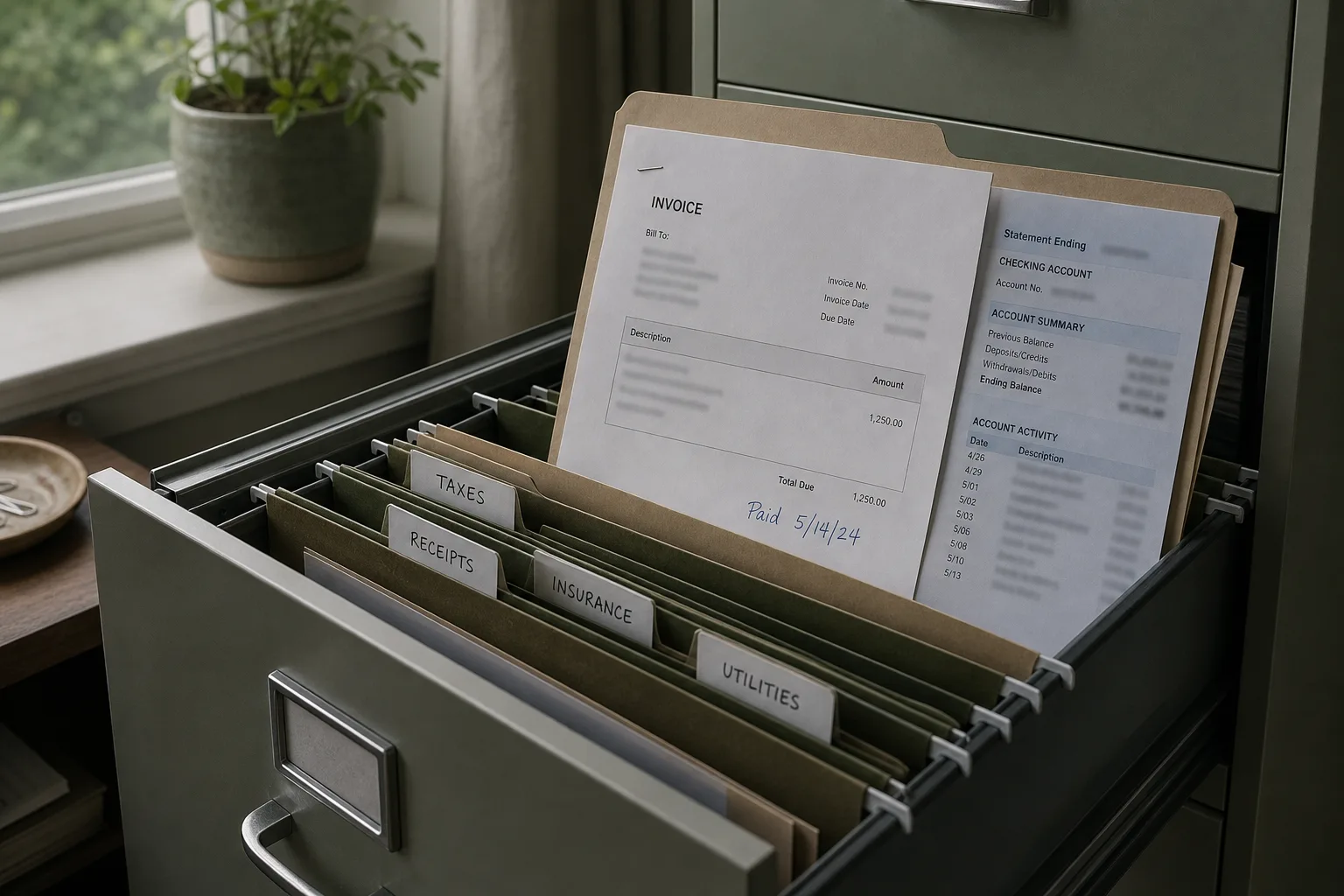
The first time someone asks you for a record, they usually ask for something slightly different from the thing you kept. You kept the invoice; the bookkeeper wants proof it cleared. You kept the estimate; the adjuster wants the signed version with a date on it. You kept the final bill; the tax preparer wants the one line that shows what portion was labor. None of this is obscure. It is simply that the people who will handle your paperwork later have a particular shape of question, and nobody explains that shape before the first year is over.
So the useful way to build a filing habit is backwards. Start from the person who will ask, work out what they need to see, and keep that. What follows is five checks, each tied to a specific requester and a specific clock.
1. Does the record prove payment, or only that a bill existed?
An invoice is a claim. A cleared check image, a card statement line, or a bank transfer confirmation is evidence. Bookkeepers and office managers ask for the second one constantly, because an unmatched invoice sits in their system as an open balance until someone proves otherwise. If you have ever received a second notice for something you already paid, this is the gap it fell into.
The practical fix is to staple the two together at the moment of payment, digitally or on paper. Scan the invoice, note the date paid and the method on it, and file both in the same place. When a contractor's office calls six months later about a balance their software still shows as open, you want a single item to send, not a search across two systems.
Keep the pair at least until the account is closed and any warranty period on the work has run. For anything connected to a tax position, follow the longer clock described below.
2. Is it the signed version, and does it carry a date?
Proposals get revised. Scopes change midway. The document that governs is the one both parties signed, including every change order signed after it. An attorney reviewing a dispute will ask for the executed agreement first and will treat unsigned drafts as context rather than evidence. An insurance adjuster reviewing a claim takes much the same view.
Two habits do most of the work here. First, never file a document without a date on its face; if the signature block has no date, write one in and note who confirmed it. Second, keep change orders physically next to the original contract rather than in a separate folder of later correspondence, because the question is almost always what the agreement said in total, not what it said at the start.
Signed agreements stay useful for as long as either party could still bring a claim under them, and that window is set by state law and varies by the type of contract and the type of defect alleged. A short conversation with an attorney about your state's limits is worth more than a general rule of thumb, and it is the kind of question that fits inside a single paid consultation.
3. Will the statements reconcile without you in the room?
The person who prepares your return, or closes your books at year end, works from statements. Monthly bank statements, card statements, and merchant or payment processor summaries are the backbone, because they are issued by a third party and they balance. Receipts explain individual lines on them.
A first-timer's most common error is keeping receipts beautifully and statements carelessly. Download statements in a stable format every month rather than relying on a bank's online archive, which typically offers a limited number of months before older periods require a request and sometimes a fee. Name the files by year and month so a stranger can sort them.
The Internal Revenue Service is responsible for the periods of limitations that govern how long return-related records remain relevant. In general terms, the window for assessment runs several years from the date a return was filed, with longer windows in defined situations such as substantial underreporting, and no limit where no return was filed at all. Many preparers work to a retention period comfortably longer than the shortest general window for exactly that reason. Ask yours which period they want you on, then apply it uniformly rather than record by record.
4. Is there a file for anything you own and might later sell?
This is the file first-timers skip, and the one that pays best. For property, the closing statement, title documents, and receipts for capital improvements establish what you put into the asset. The clock on these does not start when you spend the money. It starts when you sell, and it runs from the return reporting that sale.
That means a receipt for a new roof may need to survive a decade or more in a drawer before anyone looks at it. Keep a single folder per property, add to it rather than reorganize it, and include permits and the contractor's final invoice alongside the payment proof. A preparer handling the eventual sale will ask for exactly this folder.
5. Can you produce the policy as it read on the day of the loss?
Insurance records are judged against a date. An adjuster evaluates a claim under the declarations page, endorsements, and limits in force when the loss occurred, not the version you renewed into afterward. Keep each year's declarations page and any endorsement pages as issued, and keep expired policies for several years past expiration, because claims are sometimes reported late and coverage questions are sometimes reopened.
Alongside the policy, keep the correspondence: claim numbers, the adjuster's name, dates of calls, and what was agreed. A dated log written the same day carries real weight later, and it costs about two minutes.
The people downstream of your filing cabinet are all asking a version of the same question: what happened, on what date, and who confirmed it. Build the file so that it answers that without you, and the first year's paperwork becomes the easiest year to look back on.