FileBusiness
Waiting Six Weeks to Get Paid? Most of That Delay Was Built Into the Invoice
Most late payment is caused by the invoice rather than by the customer, and each of the fixes is a change to a template rather than to a relationship.
- ByRosalind Ntuli
- Cut8/4/26
- Length959 words
- Read4 min
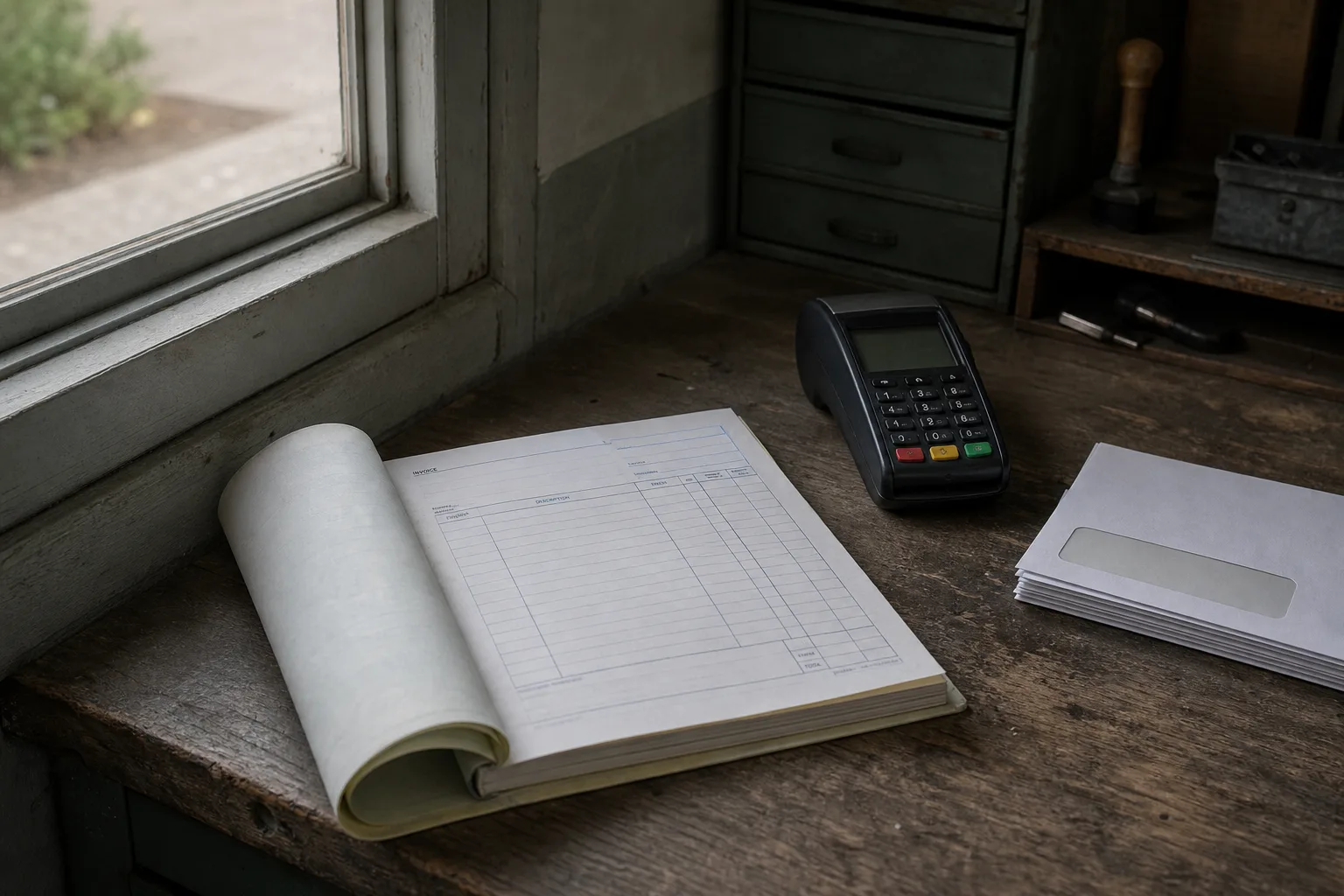
Look at an invoice that has gone unpaid for six weeks and the reason is usually sitting on the page. Owners describe late payment as a customer problem and a substantial share of it is a document problem: invoices that arrive late, lack the information a payer needs to approve them, state terms ambiguously, or offer an inconvenient way to pay, all of which produce delay that has nothing to do with anybody willingness. Each of the fixes below is a change to a template or a routine rather than a difficult conversation with anyone.
The Habits That Shorten the Wait
Take a deposit and say so in the estimate, since a deposit covering materials is standard across most trades and simply has to be asked for at the point where the customer is deciding rather than after they have committed. It also works as a commitment test, because a customer unwilling to pay a deposit is frequently the one who will be slow throughout. Then invoice on completion, the same day, because the gap between finishing and invoicing is dead time added to every payment term and in small firms it is routinely a week or more.
Put on the invoice whatever the payer needs in order to approve it, which for a business customer usually means a purchase order number, a description matching what was authorized, and the name of the person who requested the work, since an invoice a clerk cannot match to an approval sits in a queue and nobody will call to say so. State the due date as an actual date rather than as net thirty, which removes the ambiguity about when the clock started and makes any later reminder factual rather than argumentative.
How They Pay, and the Reminder Schedule
Offer the way they want to pay, because card payment carries a processing cost and frequently pays faster, which is generally the better trade, while bank details on the invoice remove a step and a payment link removes several. Then run a reminder schedule rather than a decision: a courtesy note a few days before the due date, a short reminder on the day, another a week later, and a call at two weeks. Because it is a schedule, nobody has to work up to making the call, which is the actual obstacle in most small firms.
Two Things to Settle Before the Invoice Exists
Two decisions made at the start of a job determine how the invoice is received. Both are regularly skipped in the enthusiasm of having won the work. The first is scope in writing with the exclusions named, because a large share of payment disputes are not disputes about paying at all but disagreements about what was included, and a short written scope accepted by reply removes the argument before it exists at a cost of one email sent on the day the job was agreed.
The second is establishing who actually pays. For a business customer that means the name of the person who authorizes payment, their email address, and whether a purchase order is required before any work begins. For a residential job with more than one decision maker it means knowing which of them the invoice goes to. Asking at the start is unremarkable and takes thirty seconds. Asking after an invoice has sat unpaid for six weeks sounds like an accusation and gets treated as one, which is the whole reason it belongs at the beginning.
When to Stop Working
A firm carrying an overdue balance and continuing to perform is extending credit it never agreed to, and the exposure compounds, because the customer with one unpaid invoice is generally the one who will also not pay for the next stage. The clean way to handle that is structural rather than confrontational: bill in stages on anything running longer than a few weeks, with each stage payable before the next begins, and say so in the accepted scope so that pausing is the arrangement working as written rather than a decision made against somebody.
Where a job is already underway and an account has gone overdue, one call to the person who authorized the work, made before any further material is ordered, is the moment at which the exposure stops growing. That call is easier than it sounds because it is asking a question rather than making an accusation. It usually produces either a payment or the actual reason there has not been one. The alternative, which is ordering another load of material and hoping, is how a slow account turns into a written off one over the course of a single month.
The One Who Still Does Not Pay
A small number will not pay regardless, and the response is a sequence rather than an escalation of feeling. Call the person who authorized the work rather than the accounts department and ask directly whether there is a problem with the invoice, because a surprising share of long overdue accounts turn out to be queries nobody communicated, then put whatever the answer was in writing. If nothing follows, send a demand letter with a deadline attached and keep the delivery receipt.
After that the choice is between small claims, which suits amounts under the state limit and is built for parties without representation, and a collection agency, which costs a percentage and generally ends the relationship. Both are ordinary business steps. The effect of all these habits is not primarily on the total collected, since most invoices are eventually paid, but on when, and a firm that shortens its average collection by a few weeks has been handed the use of several weeks of revenue without an application or any interest attached to it.