FileLegal
Think Settling Means You Lost? The Household Math Says Otherwise
Most people judge a settlement offer against what they are owed. The number that actually decides it is what the dispute costs you each month it stays open.
- ByDesmond Falk
- Cut8/28/26
- Length918 words
- Read4 min
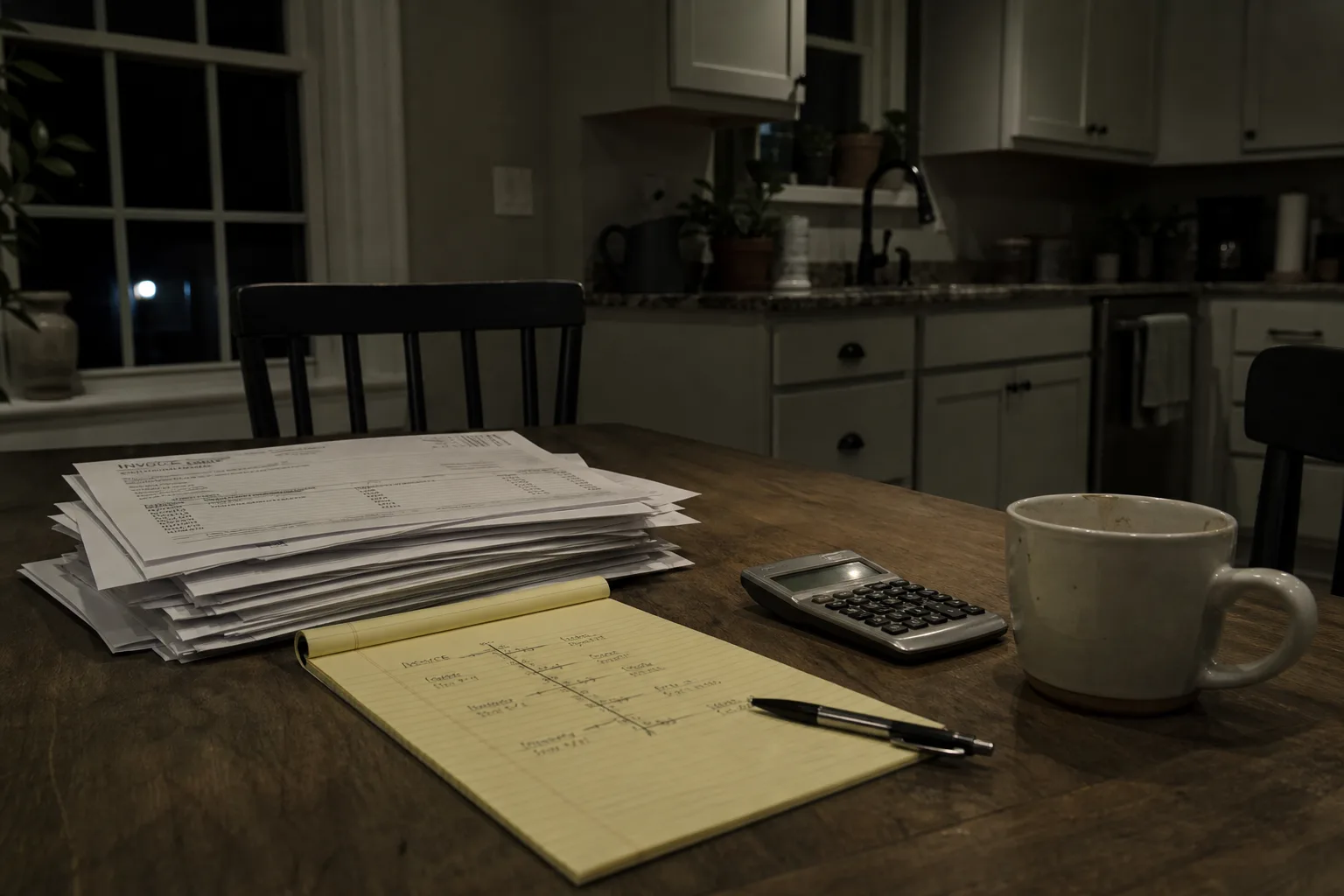
Households tend to treat a settlement offer as a verdict on the merits. The contractor offers sixty cents on the dollar, and the question becomes whether sixty cents is fair given what he did to the subfloor. That framing feels right and produces bad decisions, because it leaves out the only variable that keeps moving: what the dispute costs you to keep holding.
An individual carrying a dispute is not an insurance carrier with a claims department. There is no colleague absorbing the file. The cost lands on one or two people who also have jobs, and it lands every week, not at the end.
The assumption: settle when the offer gets close enough to what you are owed
This is the standard mental model, and it is borrowed from institutions. A company with a legal budget can reasonably compare an offer to its estimate of the likely award, apply a probability, and decide. Its cost of waiting is a line item it has already funded.
A household has no such line item. The equivalent cost shows up as evenings spent assembling a timeline, a day of unpaid leave for a hearing that gets continued, a spouse who has stopped asking how it is going. Those are real and they compound. Judged against them, an offer that looks like a loss on the merits can be the better financial outcome by a wide margin, and an offer that looks generous can be worth refusing if the file is nearly closed anyway.
The useful question is not whether the number is fair. It is what the next ninety days of holding out will cost you, and what they are likely to buy.
What actually drives the decision: your carrying cost per month
Put a figure on it before you respond to anything. Four items typically make up most of it.
- Professional fees still to come. Not what you have spent. What the next phase costs. Ask the attorney for the cost of the next step specifically, not the case.
- Your own hours. Value them at something. If you are self-employed the number is obvious. If you are salaried, count the leave you will burn.
- The unfixed problem. A dispute over a roof does not pause the leak. Damage that accrues while you are proving fault is often uninsured and rarely recovered in full.
- Attention. Harder to price, real all the same. People in long disputes make worse decisions elsewhere: they defer maintenance, miss renewal dates, let a second problem grow.
Money already spent belongs in none of these categories. It is gone whichever way you choose, and the instinct to keep going because you are already in deep is the single most expensive reflex in this area.
Collectability decides more cases than merit does
A judgment is a piece of paper that entitles you to collect. It does not collect. If the other side is a sole proprietor who dissolved the entity, a small operation with no assets in its name, or a person who has moved out of state, the practical value of winning may be well below a check offered today.
Check what can be checked before you decide. Whether the business is currently registered with your secretary of state. Whether the license is active and whether the licensing board holds a bond. Whether there is a pattern of complaints, which is the sort of consumer dispute activity the Federal Trade Commission is responsible for tracking at the national level. Whether the work was paid for by credit card, which may open a chargeback path that runs faster than litigation.
Where the other side is a company with real assets and an insurer, the calculus shifts. Their carrying cost is low and their tolerance for delay is high, but their willingness to pay something is also high, because a file left open is a file that generates internal cost. Their incentive to close is genuine even when their first number is not.
The moments when settling is worth the most
Value peaks at particular points and drains in between. Right after you send a clear, documented demand with photographs, dates and a specific figure, before either side has spent anything meaningful. Immediately before a scheduled deadline that costs the other side money, such as an expert report or a mediation date. And at the point where you have obtained the one document that settles the factual argument, when the other side can see what you have.
Between those points, offers tend to sit flat while your carrying cost keeps running. That is the stretch where households lose the most, waiting for movement that has no reason to arrive.
What the paper has to say
Whatever you accept, get it in a signed document. It should name a fixed sum, a payment date, and exactly which claims are released. Release the dispute you are settling and nothing broader. If part of the remedy is work rather than money, specify what work, by whom, by when, and what happens if the date passes. A settlement that pays promptly and closes cleanly is worth more than a larger figure that requires a second fight to enforce.
The households that come out of this well are usually the ones who priced their own time early, checked whether the other side could actually pay, and then treated the decision as a purchase rather than a judgment. You are buying back your evenings. Sometimes that is cheap at sixty cents on the dollar.