FileBusiness
What Are Experienced Estimators Actually Looking At Before They Measure Anything?
People who price work for a living describe a consistent routine on arrival, and almost none of it involves taking a dimension.
- BySylvia Achterberg
- Cut7/20/26
- Length762 words
- Read3 min
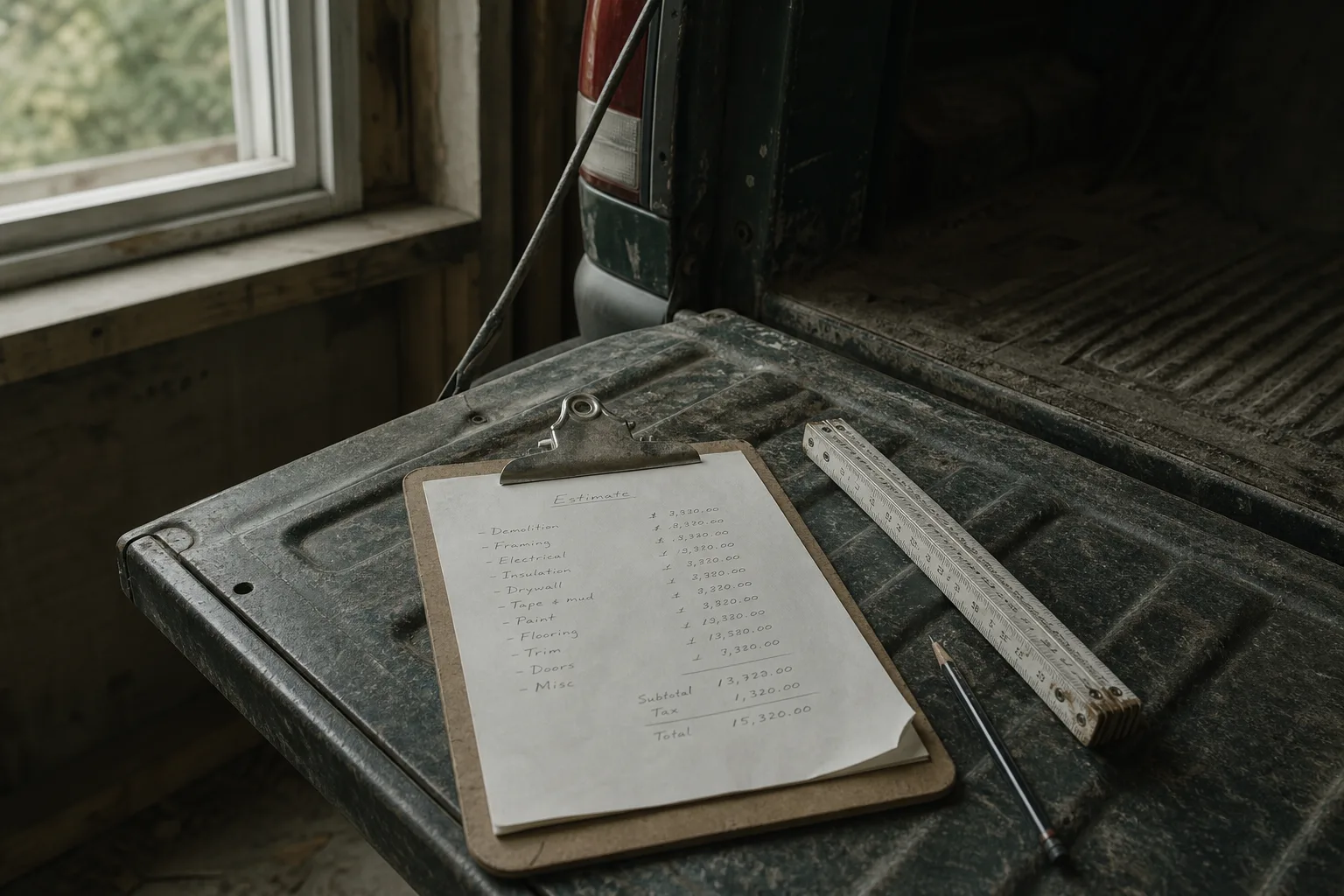
Ask somebody who has priced work for twenty years what they do when they arrive at a house and the answer has almost nothing to do with measuring. Estimating is the part of a trade business that decides whether the rest of it works, and it is almost never taught anywhere. What follows pools what estimators across several trades describe when asked the same questions, paraphrased rather than quoted from any individual, and the points where different trades independently agree are the ones worth paying attention to.
What the First Ten Minutes Are For
They look at access before they look at the work: how material gets in, where a vehicle parks, how far the carry is, whether there is a stair, whether parking requires a permit. Access is described consistently as the largest driver of labor cost that customers never think about and the most common reason a job runs over its estimate. Everything else on the site is visible to the homeowner already, which is precisely why it is not where the money hides.
Then they look for what sits behind the visible job. An estimator pricing a bathroom checks the age of the supply lines and the condition of the subfloor at the toilet, because both decide whether this is the job described or a substantially different one, and several describe asking to see the electrical panel and the water heater on every visit regardless of trade, simply because those two objects say a great deal about a building. They also listen for what the customer has already decided, since chosen materials and a fixed date are constraints that belong in the price.
How the Number Gets Built
The consistent method is to build from parts rather than to compare against a remembered job. Materials with a waste allowance, hours by task rather than for the work as a whole, subcontractors quoted rather than estimated, then overhead and margin applied on top of all of it. The hours are where they say the errors live, and specifically in the tasks that are not the work itself: setup, protection, cleanup, disposal, the trip to the supplier, and the return visit for the item that turned out not to be in stock.
Experienced estimators add those explicitly rather than folding them into an hourly rate, because a job requiring three return trips is genuinely a different job from one requiring none. Contingency gets handled openly rather than buried, and several describe quoting a firm price for everything visible alongside a stated hourly rate for anything discovered once a wall is open, with the customer told in advance which is which. Customers accept that arrangement readily and react badly to the same money arriving later as a surprise.
The Jobs They Decline
Asked what they walk away from, four answers recur and none is about the size of the job. A customer who leads with price before describing the work. A job where another contractor started and left, unless the scope can be assessed completely, because you inherit responsibility for work you did not do. A scope the customer will not put in writing. And anything where the schedule is fixed by something outside both the customer control and yours. The reasoning is identical in each case: the eventual disagreement is already visible at the estimate stage.
How the Number Gets Handed Over
How an estimate is presented matters nearly as much as the figure on it, and three practices recur. Deliver it in writing, promptly, and follow up once, because estimators describe losing more work to slowness than to price, particularly in a busy season when a customer is talking to several trades and engages whoever responds first with something concrete. Show the scope rather than only the total, since a single number invites comparison against another single number while a quote listing inclusions and exclusions is being compared on different terms entirely.
What Losing Taught Them
The most useful habit they describe is tracking outcomes, meaning not only whether a job was won or lost but what it actually cost against what it was quoted at, recorded on every job and kept somewhere it can be looked at later. That record is what turns estimating from an instinct into a method, because it reveals which categories of work are consistently underpriced, which customers generate more hours than the quote assumed, and which small omissions repeat. Almost every experienced estimator describes discovering from their own numbers that one category they had happily accepted for years was making no money at all.