FileHousing
Who Actually Decides Whether Your Renovation Returns Its Money?
Buyers admire a remodel, but in a financed sale the appraiser and the lender's underwriter decide what it counts for, and permits and deadlines settle most of it.
- BySylvia Achterberg
- Cut9/17/26
- Length934 words
- Read4 min
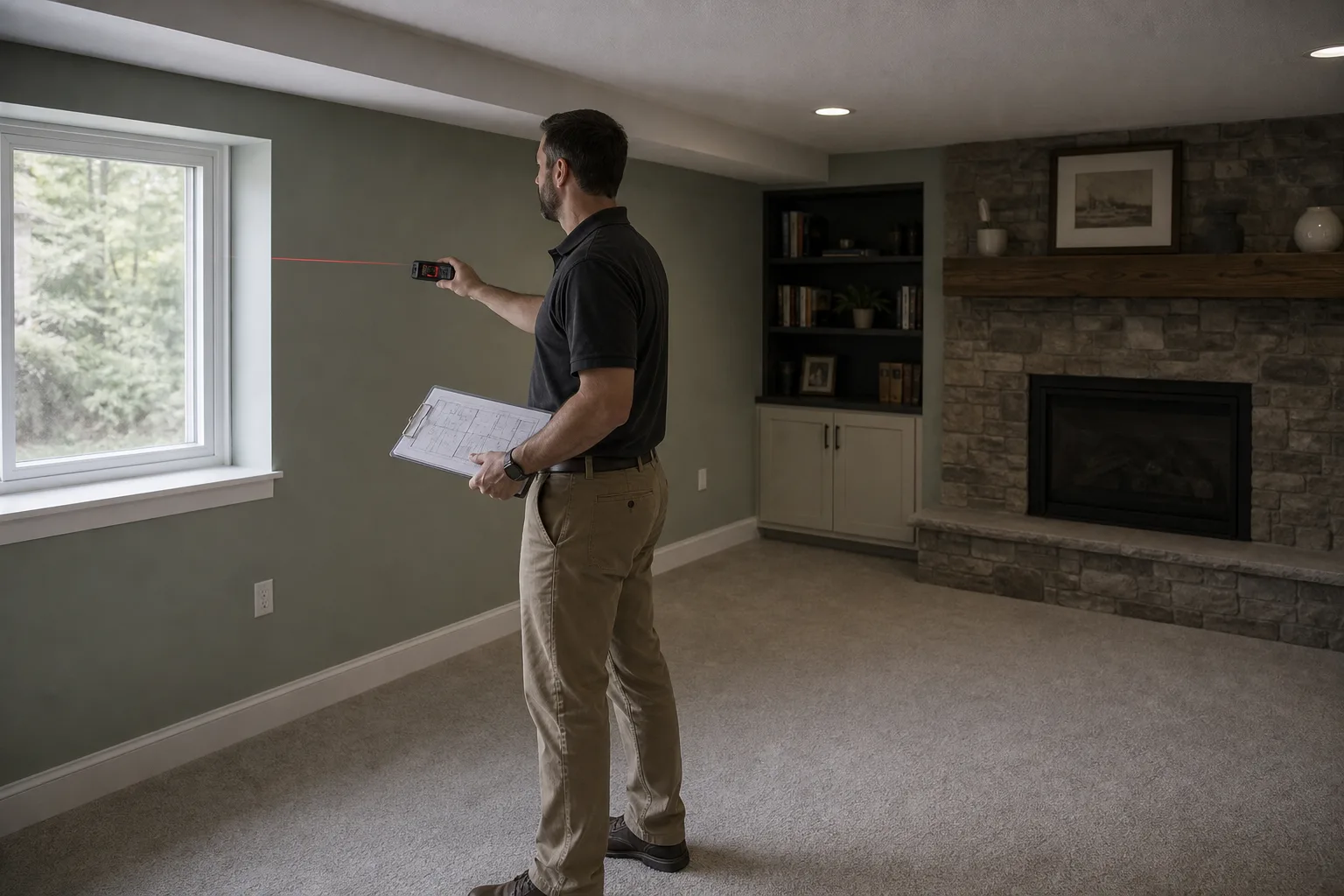
The usual way of ranking home improvements treats the buyer as the decision maker. Put in the quartz, get the money back. Skip the pool, because buyers do not want one. That framing is not wrong so much as incomplete, because in most residential sales the buyer is not paying cash. A lender is, and the lender sends someone to form an independent opinion of value. That person never sits at the closing table, never meets the seller, and in practice sets the ceiling on what any improvement returns.
The appraiser is the party almost nobody plans around. Sellers plan around buyer taste. Buyers plan around inspection findings. The appraisal shows up two or three weeks before closing and either supports the contract price or does not, and at that point the improvements that are documented behave very differently from the improvements that are merely visible.
What "returns its money" means once a third party is scoring it
An appraiser works from comparable sales in the same market, then makes adjustments for differences. That method has a built-in consequence: an improvement returns money in proportion to how often it appears in the surrounding sales record. A finished basement in a neighborhood where three recent sales had finished basements is an adjustment the appraiser can support with data. A commercial-grade kitchen in a neighborhood where nothing comparable has sold is an adjustment with nothing behind it, and appraisers are generally reluctant to make adjustments they cannot defend in the report.
This is why the improvements that hold their value tend to be unglamorous and common. Roof, systems, windows, a second full bath where the comps have two baths, square footage that is permitted and heated. They move the property toward the middle of its own market rather than past the top of it.
Permits are a date problem before they are a money problem
Here is where the paperwork decides the outcome. Appraisers and underwriters generally give credit for finished living space only when it is legal living space. A basement bedroom without an egress window, a garage conversion with no permit, an addition where the permit was pulled but never closed out with a final inspection: these are the items that get described in the report and then excluded from the square footage, or flagged with a condition the underwriter has to clear before funding.
Building permits typically expire if no inspection is requested within a set window, often six months, and many jurisdictions allow one renewal. Once a permit lapses, closing it out later is a retroactive permitting process, not a phone call. That process can require opening finished walls so an inspector can see wiring and framing, engineering letters, and a re-inspection queue measured in weeks. None of that fits inside a thirty day escrow.
If you are three years from selling, the low-cost fix is to close out old permits now. If you are under contract and just discovered an open permit, the realistic move is disclosure plus a price conversation, because the calendar has already decided the rest.
How common improvements tend to land
| Improvement | How it typically lands with the appraiser | What makes or breaks it |
|---|---|---|
| Roof, HVAC, electrical service upgrade | Supports condition rating; removes lender-required repair conditions | Permit records, dated invoices, manufacturer warranty transfer |
| Permitted addition or finished basement | Counted in gross living area if legal and finished to standard | Closed permit, certificate of completion, ceiling height and egress |
| Kitchen and bath updates | Reflected in condition and quality ratings, not as a line-item cost recovery | Consistency with comparable sales in the same price tier |
| Pool, high-end landscaping, luxury finishes | Often a modest adjustment or none, depending on market | Whether comparable sales in that market include them |
| Unpermitted conversion | Frequently excluded from living area; may trigger an underwriting condition | Retroactive permitting, which takes months |
| Solar with a leased system | Treated as equipment, not added value; assignment must be handled | Lease assumption paperwork completed before funding |
The dates that decide whether a low number gets corrected
A purchase contract with an appraisal contingency gives the buyer a fixed number of days after receiving the appraisal to object or terminate. Miss it and the contingency generally lapses, which cuts both ways: the buyer loses the exit, and the seller loses the leverage to renegotiate around it.
If the appraisal comes in low and you believe it missed documented work, the remedy is a reconsideration of value submitted through the lender. It has to be factual: better comparable sales, a closed permit the appraiser did not have, a corrected square footage measurement. It also has to be fast, because the rate lock and the contingency deadlines are running at the same time. Sellers who keep permit finals and invoices in one folder can respond in a day. Sellers who have to call the county cannot.
The same folder does work at tax time
The IRS is responsible for the rules on how a home's cost basis is calculated, and the distinction it draws is between capital improvements, which are added to basis, and ordinary repairs, which are not. That makes the receipts you keep for the appraiser the same receipts that matter if the gain on your sale exceeds the exclusion you qualify for. Two purposes, one folder, dated contemporaneously.
The practical rule is that an improvement returns its money when a stranger can verify it from documents. Build the file as the work happens, close every permit while the inspector is still willing to come out, and the party you never met will be able to credit what you actually did.