FileHousing
Five Checks in the First Two Days After a Leak, and the Standard Behind Each One
Water damage decisions made in the first two days are governed by industry standards, state licensing rules and policy conditions. Here is what each one actually requires of you.
- ByRosalind Ntuli
- Cut10/1/26
- Length1,076 words
- Read5 min
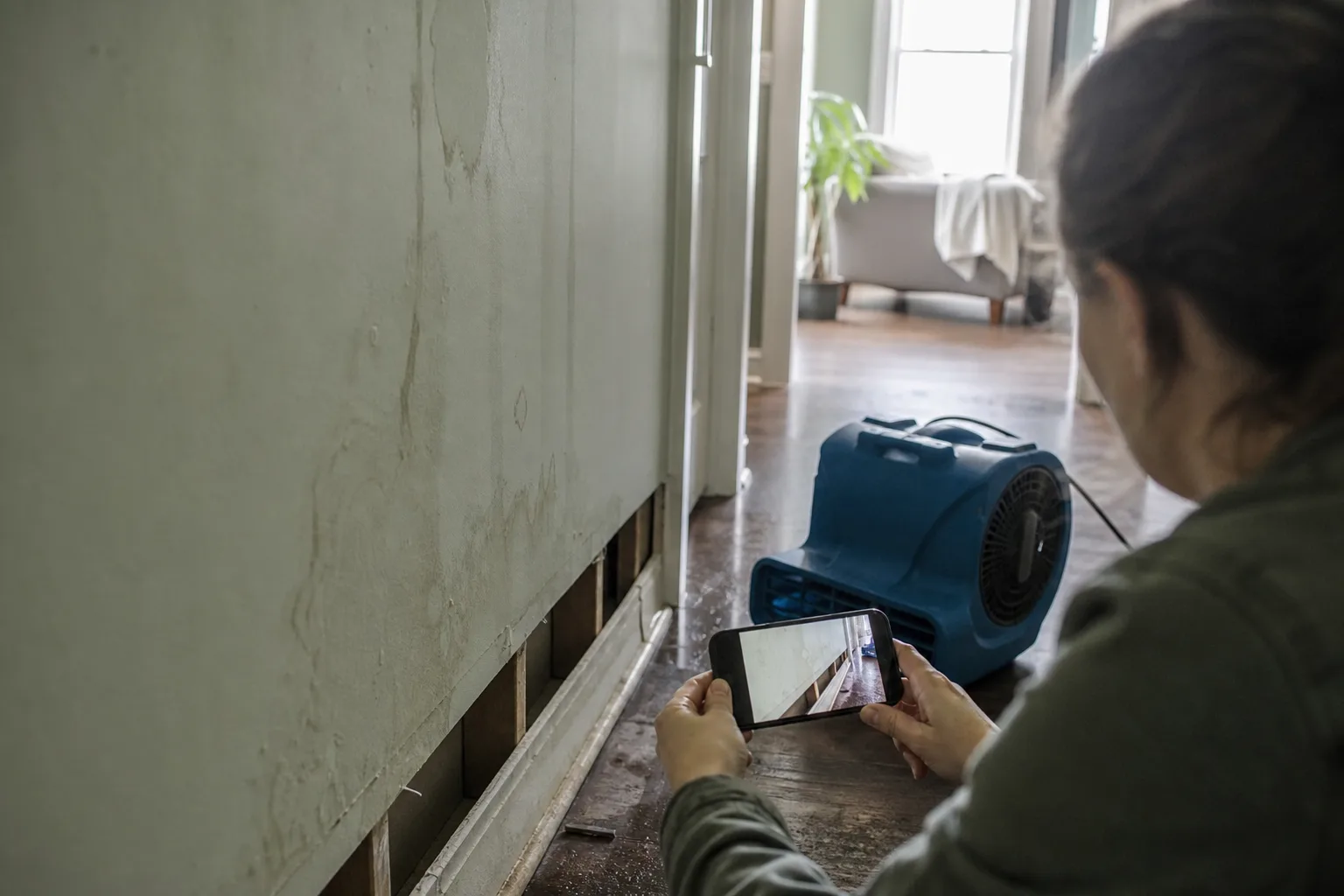
The decisions a household makes in the two days after water gets into a building are not freewheeling. Each one sits against a backdrop of industry standards, state licensing rules and insurance policy conditions that were written long before the supply line failed. Most homeowners never read any of it. The practical effect is that they make reasonable choices that happen to fall on the wrong side of a line, and find out about the line months later when the invoice and the claim payment do not match.
What follows is five checks, each framed as a pair of defensible options, with the conditions under which each one wins.
1. Category of water: dry the carpet in place, or cut it out
The restoration industry classifies water by source and contamination. Clean water from a supply line or a water heater is one thing. Water that has passed through a dishwasher, a washing machine or a wall cavity is another. Sewage and flood water from outside the building sit at the far end, and nothing porous that has absorbed them is salvageable by drying.
Drying carpet and pad in place is the cheaper option and it is legitimate when the source was clean, the water has been standing for a short period, and the material can be lifted, floated and dried to a documented target. Removal wins when the source was contaminated, when the pad is already saturated and the water sat long enough to begin changing category, or when the carpet backing has delaminated.
The decision point matters because category is not fixed. Clean water degrades over time and across materials. A restorer who arrives on day one is working with different facts than one who arrives on day three, and the written scope should say which category was assigned and why.
2. Your own phone, or the restorer's moisture log
Both. They prove different things, and the common mistake is to rely on whichever one is in front of you.
Your photographs establish the condition of the property before anyone touched it: the standing water, the ceiling stain, the contents on the floor, the model and serial plate on the failed appliance. Take them before extraction starts. If the crew arrives and pulls baseboard in the first hour, that view is gone.
The restorer's documentation establishes something an adjuster will ask for separately: initial moisture readings, daily readings at the same marked points, equipment placement, and the drying target. Standard practice in the trade is to dry to a documented goal based on an unaffected reference area, not to a fixed number of days. Three air movers running for five days is not evidence of anything on its own. A log showing a wall at saturation on Monday and back to the reference reading by Thursday is.
Ask for the daily log in writing at the outset rather than at the end. A crew that keeps one will hand it over without friction.
3. The insurer's preferred vendor, or a contractor you choose
Most policies let the homeowner select the contractor. Many insurers maintain a managed repair or preferred vendor network and will offer to dispatch someone within hours. Both routes are defensible and they win under different conditions.
The network vendor usually wins on speed and on pricing friction. The company has pre-agreed rates, the invoice rarely gets challenged line by line, and the vendor has an interest in keeping the referral relationship. For a straightforward clean-water loss in a single room, that is often the shortest path to a dry house and a settled claim.
Choosing your own contractor wins when the loss is large, when the building has unusual construction, when you already have a relationship with a firm that knows the property, or when you anticipate a dispute about scope. The independent contractor answers to you alone. The tradeoff is that you will be the one reconciling their estimate with the adjuster's, and that reconciliation takes time and attention.
Whichever route you take, read the work authorization before signing. Separate the authorization to perform emergency mitigation from any assignment of insurance benefits or agreement to perform the full reconstruction. Those are three distinct commitments and they are frequently printed on one page.
4. Mitigation work, or mold remediation work
These are different trades with different rules. Several states license mold assessment and mold remediation separately from general contracting, and some of those states prohibit the same firm from both assessing a property and remediating it, precisely to remove the incentive to find more work than exists. Other states have no mold licensing regime at all. Check what applies where you live before anyone writes the word mold on a scope of work.
The Environmental Protection Agency is responsible for federal guidance on indoor mold and moisture, and the widely cited principle in that guidance is that the response to wet building materials is drying promptly rather than testing first. For a household, the practical version is this: in the first forty-eight hours the job is water removal and drying, and a firm that opens with a sampling proposal on day one is solving a different problem than the one you have.
Remediation becomes the right conversation when materials stayed wet past the drying window, when there is visible growth on an area of any size, or when the water was contaminated from the start.
5. Notice to the insurer, or emergency work first
Policies typically impose two separate duties: give prompt notice of the loss, and take reasonable steps to protect the property from further damage. These are not in tension. You are expected to stop the water and begin drying without waiting for permission, and you are expected to tell the carrier quickly.
Many policies also cap what they will pay for emergency mitigation before an adjuster has inspected, or require approval above a threshold. Call the claims line on day one even if you have no figures yet, ask what the emergency limit is, and write down the claim number and the name of the person who told you. Keep every receipt for fans, pumps, hotel nights and board-up materials. Reimbursement for reasonable protective expense is a standard feature, and it depends on paperwork you can only gather while it is happening.
Two days is enough time to get all five of these settled, and each one answered early narrows the number of arguments available to anyone later.