FileHousing
Ordering a Survey Before Closing? Five Things That Move the Price, and What the Drawing Settles
A boundary survey is priced on research hours and corner recovery, not on the size of the yard, and the drawing keeps earning its fee long after closing.
- ByDesmond Falk
- Cut9/10/26
- Length1,058 words
- Read5 min
A survey is one of the few closing costs that keeps working after the money moves. The appraisal is filed and forgotten. The inspection report becomes a punch list you either act on or quietly abandon. The survey drawing, by contrast, is the document you pull out three years later when a neighbor's contractor sets forms two feet inside your line, or when the town asks where the shed will sit relative to the side setback. That is the reason to think about what you are buying rather than shopping for the lowest quote and hoping it covers whatever comes up.
The price of a survey is also poorly understood, because it is not really priced on the size of the lot. It is priced on how much research and field time it takes to prove where the lines are. Those are two different things, and the gap between them explains almost every quote that surprises people.
1. The research hours, which happen before anyone visits the property
A licensed surveyor does not arrive and start measuring. The work begins in the county recorder's office and in the surveyor's own archive: the deed, the deeds of the adjoining parcels, the subdivision plat if there is one, prior surveys, road right of way maps, easements of record. A parcel in a 1998 platted subdivision with monuments set by a firm still in business is cheap to research. A parcel described by metes and bounds, split off from a farm in the 1950s, with a description that references a fence corner and an oak tree, is expensive, because the surveyor has to reconcile several conflicting descriptions and then decide, professionally, where the boundary is.
Ask any bidder what fee basis they are quoting. Routine suburban lots are usually a flat fee. Anything with a hand-drafted description, an old right of way, or a history of splits tends to be quoted hourly or with a research allowance and an overage rate. That is not a markup. It is the honest shape of the work.
2. Corner recovery, terrain and everything growing on the lot
Field cost tracks the number of corners that have to be found or set, and how hard they are to reach. Four corners on a level rectangular lot is one visit. A five-sided parcel on a wooded slope, with two corners under a decade of brush and one probably paved over when the road was widened, is a different job. Vegetation is the single most underestimated cost driver in field work, because clearing sight lines is manual labor charged at crew rates.
Urban parcels have their own version of this. Corners get destroyed by utility trenching and sidewalk replacement, so the crew works from more distant control and spends longer proving it. If a neighboring survey was done recently and the monuments are intact, the job gets shorter. Say the word "monuments" when you call. A surveyor who hears it will tell you quickly whether your lot is likely to be simple.
3. The product you order, which matters more than the parcel
Several very different deliverables get called "a survey," and buyers routinely pay for the wrong one.
- Mortgage inspection or location report. Cheapest. Shows the house roughly in relation to the lines. Not a boundary determination, and in many states it explicitly says so. Fine for a lender checkbox, useless in a dispute.
- Boundary survey. The standard purchase product. Lines established, corners monumented, drawing signed and sealed.
- Boundary with improvements or a stake-out. Adds located structures, drives and fences, or physical stakes on the ground where you can see them. Modest add-on, disproportionately useful if you plan a fence.
- ALTA/NSPS land title survey. Commercial standard, driven by the title commitment and a list of optional items. Substantially more expensive and rarely warranted for a house.
- Elevation certificate. A separate product tied to the flood mapping program the Federal Emergency Management Agency is responsible for. If the parcel touches a mapped flood zone, ordering it in the same visit is cheaper than a second mobilization.
Mobilization is the quiet line item. Two trips cost more than one trip that did more.
4. The week-to-week reality the drawing actually governs
Almost nothing dramatic happens with property lines. What happens is small and recurring. You mow a strip and cannot tell whether it is yours. The neighbor's downspout discharges toward your foundation. A tree that drops limbs on your roof is either your maintenance obligation or theirs. The cable company wants to trench along a side yard where an easement may or may not run. Somebody wants to replace a shared fence and split the cost, which requires agreeing where the fence goes.
These are the situations a signed boundary survey resolves in an afternoon, usually without a lawyer. That is the running cost the survey offsets. A fence built to a guess and later moved costs more than the survey did. So does a permit application rejected for a setback the applicant could not document, and a hedge dispute that reaches the point of paid correspondence.
5. Timing, and the two ways a survey gets paid for twice
Order early in the contract period. Surveyors are seasonally booked, frozen ground and heavy leaf cover both slow field work, and rush scheduling carries a premium in most markets. Ordering ten days before closing is how a routine fee becomes an expedited one.
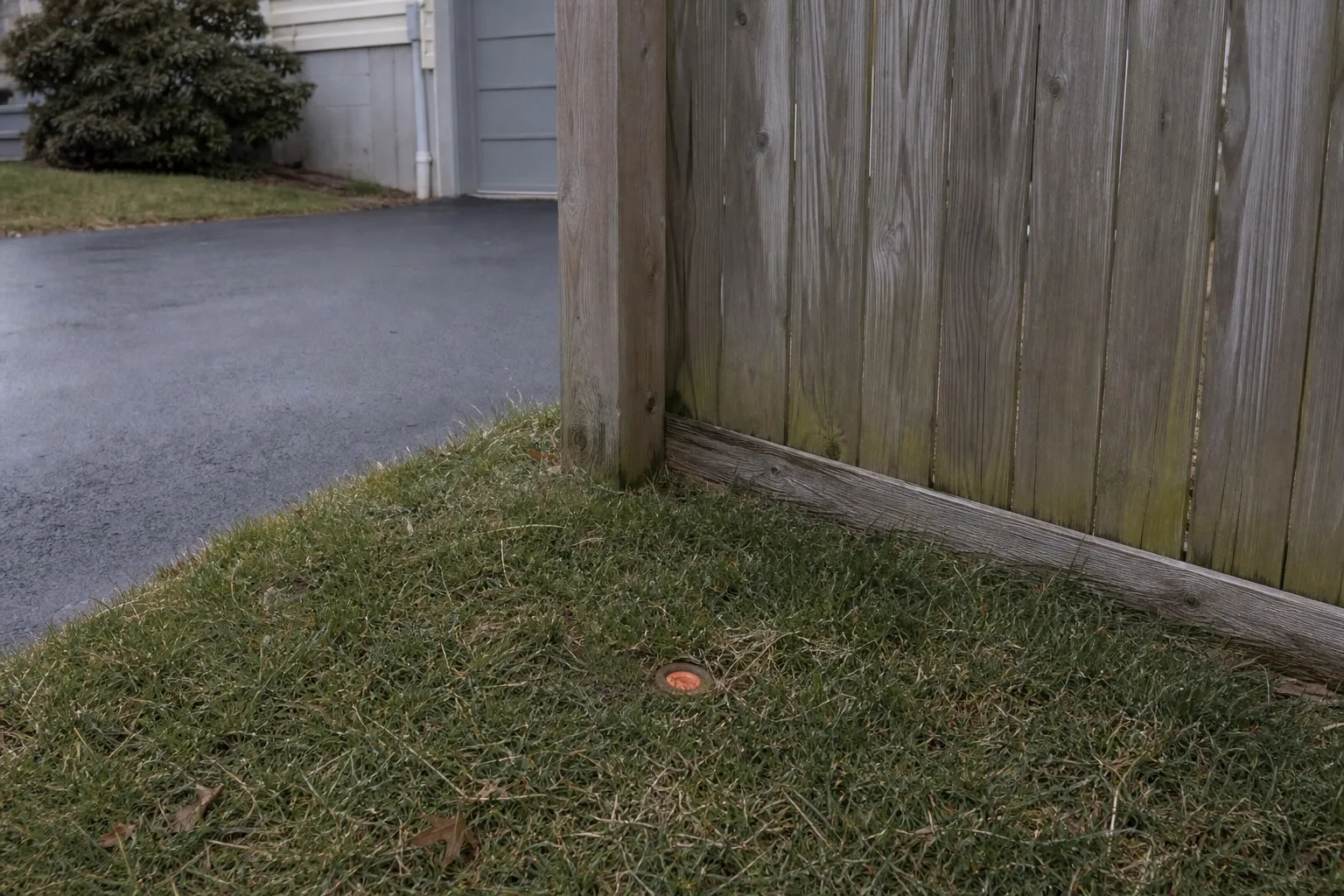
The second overspend is losing the work. Monuments set during a survey get pulled out by grading, driveway work and landscaping within a season or two, and re-staking is a second billable visit. Photograph each corner with something recognizable in frame, keep the sealed drawing with your closing documents rather than in a folder on a laptop, and ask the surveyor whether the plat can be recorded in your county. A recorded survey benefits the next owner and, more immediately, is easier to point to than a paper copy nobody can locate.
The useful way to compare quotes is not by price but by scope: research allowance, number of corners, whether improvements are located, whether stakes are set, and what a return visit costs. Two firms quoting the same number are frequently proposing different jobs, and the difference shows up years later, in the ordinary week where you need to know exactly where your land stops.