FileLegal
A Demand Letter Is One Page a Household Can Write Well Without Any Help
It is the most useful document in ordinary consumer and contract disputes, and its power comes from being specific rather than from being threatening.
- ByRosalind Ntuli
- Cut7/28/26
- Length784 words
- Read3 min
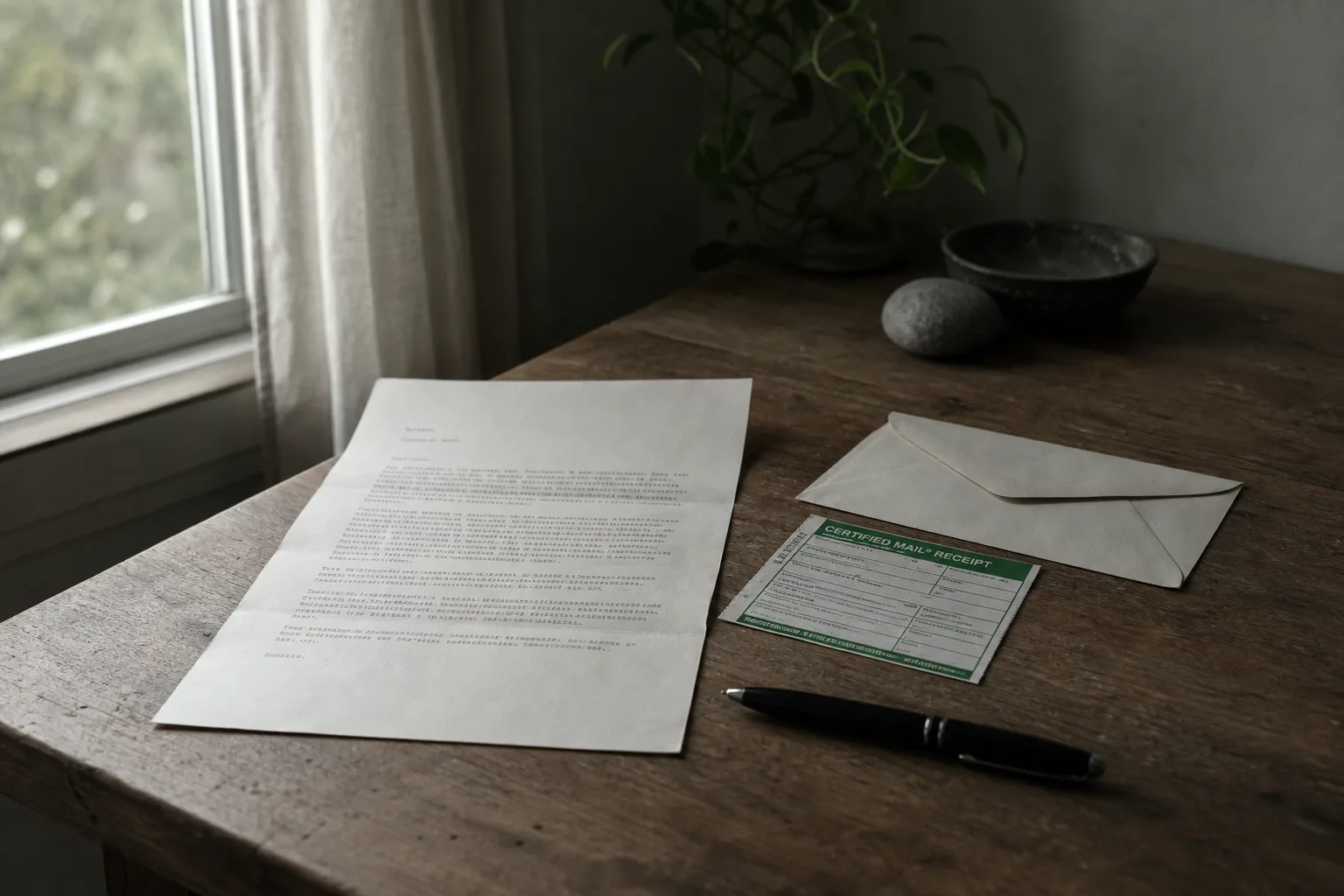
A demand letter is generally imagined as something an attorney produces on letterhead, which is why so few households ever send one. It is in fact the most useful document in ordinary consumer and contract disputes and one of the very few legal instruments a household can write well without any assistance at all. Its power comes from being specific rather than from being threatening, and most of the letters that fail do so because they are the wrong length in one direction or the other. The version that works runs to about a page.
The Six Elements
Who you are and what the matter concerns comes first, in one sentence carrying an account number, an invoice number or a job address so the recipient can locate the file. What was agreed comes second, quoting the contract, the estimate, the policy or the advertisement with its date. This is the paragraph that does the actual work. That is why it should be short enough that nobody skips it. What happened instead comes third, as facts in date order without adjectives, in three or four sentences, with any longer chronology moved onto a second page.
What you want comes fourth and has to be specific: an amount, an action, or both. Vague requests to make this right are the single most common weakness in these letters, because they leave the recipient to define the remedy and give a court nothing to enforce. A deadline comes fifth, generally ten to thirty days out and one you actually intend to keep. What happens next comes sixth, as a plain statement of the route you will take, and naming a specific step such as a licensing board complaint is more effective than a general warning provided you will take it.
The Tone That Works
Flat, factual and slightly formal. The reader is very often not the person who caused the problem. The letter works best when it is easy for that reader to carry to a supervisor and act on, which a page of grievance is not. Three things belong nowhere in it: threats beyond the ordinary legal routes, which can undermine the letter and occasionally create liability of their own; characterizations of the other party motives, which are unprovable and invite a defensive reply; and any statement you are not certain is accurate, since every sentence will be read closely later.
Attach copies of the key documents rather than originals, and keep the attachments to the few that matter, because a letter arriving with forty pages behind it gets set aside for a day when somebody has time and that day does not arrive. Two or three exhibits, referred to by name in the body, do the same job and get read in the same sitting as the letter, which is the outcome the whole document is arranged around.
How to Send It
Delivery has to be provable, which makes certified mail with a return receipt the most useful route, since a signed receipt is evidence a court accepts without argument. Email in addition is sensible because it is faster and produces a timestamped copy. Address it to a person or a department with authority rather than to a general address: for a company, the registered agent listed with the state is a reliable target and a matter of public record, and for a licensed contractor the address on the license record is the one that counts.
If Nothing Comes Back
Silence is a common outcome and is not a failure of the letter. Three things follow from it in order. Do the thing you said you would do, on the date you said, because a deadline passing without consequence teaches the recipient how to treat the next one. Check that the letter reached the right place before assuming it was ignored, since a receipt signed by somebody unexpected or an entity whose registered agent has changed occasionally explains the silence entirely. Then take the next step and reference the letter inside it.
Where to Stop
Write the letter yourself, send it yourself, and handle the reply yourself where the reply is an offer or a question. Hand the matter over at four specific points: when the response comes from an attorney, because from that moment a professional is reading everything you write; when the amount is large enough that a mistake in the release language would matter; when the other side raises a counterclaim, because the exposure has changed direction; and when there is a deadline you do not fully understand, which is the failure that cannot be repaired afterward. Short of those four, a substantial share of disputes end within weeks of one page arriving.